Purisaki Berberine Patches Review (2026)
Disclosure: This article contains affiliate links. If you purchase through them, we may earn a commission at no extra cost to you. Our editorial assessments are not influenced by these relationships — we cover both strengths and limitations of every product we review.
Quick Verdict
Purisaki Berberine Patches contain genuinely researched botanical ingredients — berberine, fucoxanthin, green tea extract, and pomegranate oil among them. The convenience of patch delivery is real. The ingredient science for berberine is real.
The part that deserves scrutiny: no published, peer-reviewed clinical data confirms that a consumer adhesive patch delivers berberine at levels sufficient to replicate the effects documented in oral berberine trials. That is not a minor footnote — it is the central question anyone serious about results should understand before buying.
This review explains exactly where the evidence starts and the marketing ends.
Rating: 3.2 / 5
| Factor | Score |
|---|---|
| Ingredient quality | ⭐⭐⭐⭐ (4/5) |
| Delivery method (transdermal) evidence | ⭐⭐ (2/5) |
| Transparency (ingredient dosages) | ⭐⭐ (2/5) |
| Value for money | ⭐⭐⭐ (3/5) |
| Customer service (based on public reviews) | ⭐⭐ (2/5) |
| Refund policy | ⭐⭐⭐⭐ (4/5) |
→ Check current Purisaki pricing and offers
Table of Contents
- What Are Purisaki Berberine Patches?
- The Big Question: Does Transdermal Berberine Actually Work?
- Ingredients Breakdown
- How to Use Purisaki Patches
- What Real Customers Say (Including the Complaints)
- Pricing and Subscription Warning
- Who Should Try Purisaki — And Who Shouldn't
- Comparison: Patches vs. Oral Berberine Capsules
- Honest Verdict
- Frequently Asked Questions
What Are Purisaki Berberine Patches?
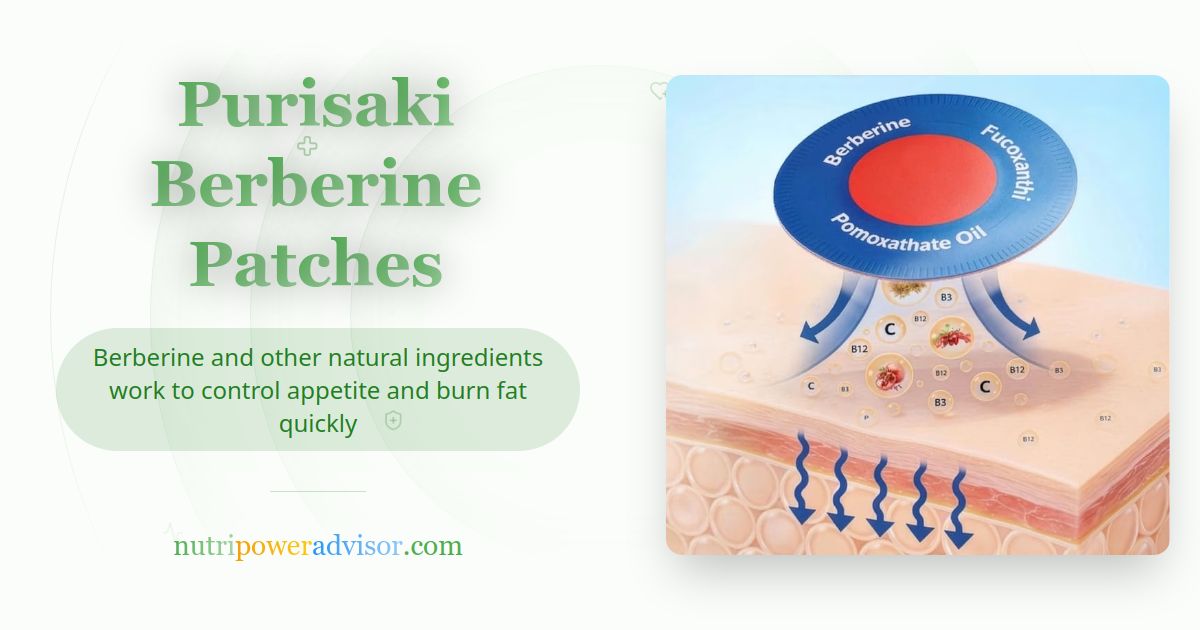
Purisaki Berberine Patches are transdermal wellness supplements — thin, adhesive patches you apply to clean, dry skin on your upper arm, shoulder, or stomach area. The concept is straightforward: instead of swallowing a capsule, the active ingredients slowly pass through your skin and into your bloodstream over an 8-hour wear period.
The manufacturer markets them around three core ideas:
- Berberine is the primary active compound, positioned around metabolic support, blood sugar regulation, and appetite control
- Patch delivery bypasses the digestive system — which is genuinely relevant, since oral berberine is known for both poor bioavailability and causing gastrointestinal discomfort in many users
- Plant-based, stimulant-free formula designed for daily use without jitters or energy crashes
The three-layer patch construction includes a BreathFlex Comfort Layer (the outer, skin-friendly base), a ComfyProtect Protective Layer (biodegradable outer shield), and a Berberine Release Core Layer designed for controlled, time-released delivery.
One immediate transparency issue: Neither the official website nor publicly available product labeling discloses the individual amounts of each ingredient per patch. You know what is in the formula — you do not know how much.
The Big Question: Does Transdermal Berberine Actually Work?
This is the section that separates a serious review from a marketing document dressed as a review. Let us be precise.
What the science says about berberine itself
Berberine is not a fringe ingredient. It is one of the more thoroughly studied plant compounds in metabolic health research. A 2020 meta-analysis published in Clinical Nutrition ESPEN, covering 12 randomized controlled trials, found that oral berberine supplementation was associated with moderate but statistically significant reductions in body weight, BMI, and waist circumference. The mechanism is well-understood: berberine activates AMPK (adenosine monophosphate-activated protein kinase), often called the body's "metabolic master switch," which influences how the body processes glucose and regulates fat storage.
The oral bioavailability problem is also real. Standard oral berberine has notoriously poor absorption — some studies estimate as low as 0.68% in the gut due to its molecular structure and first-pass liver metabolism. This means you need high doses (typically 900–1,500 mg per day across multiple doses) to see consistent effects in clinical trials. It also explains why gastrointestinal side effects are common with oral berberine at therapeutic doses.
So far, the logic for a patch makes sense. The question is whether the patch actually delivers berberine through skin effectively.
What the research actually shows about transdermal berberine
Here is where reviewers who simply write "transdermal delivery is proven" are doing you a disservice.
A frequently cited 2018 study published in PMC (Buchanan et al.) demonstrated that transdermal berberine in rats achieved approximately 3.6 times higher blood levels than oral administration. That sounds like strong support for patches — but the details matter enormously:
- The study used a 5% pharmaceutical-grade cream, not an adhesive patch
- The dose was 90 mg/kg body weight — equivalent to over 6,000 mg for a 150-pound person
- The compound that performed best was not berberine itself, but dihydroberberine (DHB), a chemically modified form with different skin-penetration properties that most consumer patches, including Purisaki, do not use
A 2024 research paper in Analytical and Bioanalytical Chemistry explored berberine delivery via chitosan microneedle arrays — specialized needle-tipped patches — and found effective skin permeation, but again using engineered microneedle technology, not a flat adhesive patch.
The bottom line, as an independent analysis on transdermal berberine research summarized it: the transdermal berberine consumer market is "scientifically plausible, commercially active, and clinically unvalidated for the specific product formats being sold." No consumer patch brand — Purisaki included — has published independent pharmacokinetic data showing their specific patch achieves systemic berberine concentrations comparable to effective oral doses.
This does not mean Purisaki Berberine Patches do nothing. The other ingredients in the formula (fucoxanthin, green tea extract, pomegranate oil) may have better transdermal profiles. And berberine's poor oral bioavailability means even modest transdermal absorption could, in theory, be competitive. But the data gap is real and worth knowing about.
Ingredients Breakdown
Berberine Extract
The headline ingredient. A natural isoquinoline alkaloid found in plants including barberry (Berberis vulgaris) and goldenseal. Well-studied for blood sugar regulation, insulin sensitivity improvement, and appetite modulation through AMPK activation. The research on oral berberine is solid. The specific research on patch-delivered berberine at consumer doses is limited (see above).
Fucoxanthin
A carotenoid pigment derived from brown seaweed. This is an interesting addition with genuine research behind it. Studies, primarily in animal models and a small number of human trials, suggest fucoxanthin may target white adipose tissue (belly fat specifically) and support thermogenesis. A 2010 study in Diabetes, Obesity and Metabolism found modest but meaningful fat reduction in obese women taking a supplement combining fucoxanthin with pomegranate oil over 16 weeks. The combination with pomegranate oil is specifically how Purisaki uses it — which matches the research.
Pomegranate Oil (Punicic Acid)
Rich in punicic acid, a conjugated linolenic acid with antioxidant properties. As noted above, its combination with fucoxanthin has been examined in human trials with positive metabolic signals. Pomegranate oil also supports cardiovascular health and may have anti-inflammatory properties.
Green Tea Extract (EGCG)
Among the most well-studied thermogenic compounds available. EGCG (epigallocatechin gallate) has been shown in multiple trials to modestly increase fat oxidation and 24-hour energy expenditure. A foundational 2000 study in the American Journal of Clinical Nutrition found green tea extract increased energy expenditure by approximately 4% in healthy men. Solid ingredient.
African Mango Extract (Irvingia gabonensis)
Studied primarily for appetite regulation and fat metabolism. Research, including a 2009 randomized, double-blind trial published in Lipids in Health and Disease, found meaningful reductions in body weight and waist circumference over 10 weeks versus placebo. Effect sizes were promising, though the research base is smaller than berberine or green tea.
Vitamins C, B1, and B3
These vitamins support general metabolic health — B vitamins are cofactors in energy metabolism, and vitamin C contributes antioxidant activity. Their inclusion makes sense formulaically even if they are not primary fat-loss drivers.
What Is Missing: Dosage Transparency
None of the above ingredients have disclosed individual patch dosages. This is a real limitation. Effective doses for these compounds are well-established in the literature — berberine at 900–1,500 mg/day, EGCG at 270–1,200 mg/day. Without knowing how much is in each Purisaki patch, there is no way to assess whether the formula contains therapeutically relevant amounts.
How to Use Purisaki Patches
According to official product guidance:
- Remove the patch from its packaging
- Apply to clean, dry skin — recommended areas include the upper arm, shoulder, back, or stomach (near the navel for some versions, which has higher vascular density)
- Press firmly for 10–15 seconds to ensure good contact
- Wear for 8 hours, then remove
- Apply the next patch to a different area of skin to avoid irritation
- The manufacturer recommends consistent daily use for at least 90 days for full benefit evaluation
The patches are described as virtually odorless and discreet enough to wear under clothing without detection.
What Real Customers Say — Including the Complaints
On the official Purisaki website, a 4.3-star average from over 8,000+ reviews is displayed. On Trustpilot, where reviews are independently verified, the picture is more mixed.
Positive patterns in verified reviews:
- Many users report reduced cravings and improved appetite control within 1–2 weeks
- The convenience factor is consistently praised — applying one patch per day versus remembering multiple capsules
- Several users note the patches stayed on well during normal daily activities
- A number of reviewers report gradual weight changes (5–14 pounds) over 8–12 weeks of consistent use
Negative patterns and serious complaints to know about:
Hidden subscription model. Multiple verified Trustpilot reviewers report being enrolled in an auto-renewing monthly subscription without clearly understanding the terms at purchase. One reviewer noted: money was charged monthly after an initial order without their clear consent. This is a significant consumer concern. Before ordering, read the subscription terms carefully and confirm whether you are buying a one-time purchase or enrolling in a recurring plan.
Refund disputes. Several customers who attempted to return products report discrepancies between the refund amount promised and the amount actually received. Reviewers describe being told a full refund policy applied, then receiving partial refunds with deductions that were not clearly explained upfront.
Customer service responsiveness. A pattern of delayed or non-responses from customer support appears across multiple reviewers, particularly for cancellation requests. One reviewer described sending three emails with no response while trying to cancel a subscription due to an allergic skin reaction.
No results for some users. As with any supplement, a meaningful portion of users report no noticeable change in weight or appetite after 30 days of use.
Our assessment: The positive reviews appear genuine and the product has a real user base that finds value in it. However, the subscription model complaints and refund dispute patterns are serious enough to warrant caution. Screenshot your order confirmation and cancellation communications. If you are purchasing primarily to try the product once, confirm you are not being enrolled in a subscription.
Pricing and Subscription Warning
Based on publicly available information at the time of writing:
| Package | Approx. Price | Per Patch |
|---|---|---|
| Starter (1 month) | ~$34.99–$49.99 | ~$1.17–$1.67 |
| 2-Month Supply | Better per-unit cost | Lower |
| 3-Month Supply | Best per-unit value | Lowest |
The manufacturer offers a 60-day money-back guarantee — which is notably well-matched to their recommended 60-90 day evaluation period.
⚠️ Subscription Warning: According to the company's own terms, subscription options auto-renew monthly. Cancellation must be initiated before the next order dispatches. If the item has already been shipped, the subscription terminates the following month — meaning you may receive and pay for one additional shipment after cancellation. Given the customer complaints above, explicitly confirm the cancellation in writing and save the confirmation.
→ View current Purisaki pricing
Who Should Try Purisaki — And Who Shouldn't
Purisaki Berberine Patches may be worth trying if you:
- Have tried oral berberine and experienced significant gastrointestinal side effects (nausea, cramping) — this is a legitimate use case for patch delivery
- Have difficulty maintaining a pill-taking routine and find patches more practical for compliance
- Are looking for a stimulant-free, plant-based metabolic support tool and understand it works alongside — not instead of — healthy habits
- Are comfortable ordering knowing the subscription model requires active management
- Have no pre-existing skin sensitivities to adhesive patches
Purisaki Berberine Patches are probably not right for you if:
- You expect rapid, dramatic weight loss — no supplement in this category should be purchased with that expectation
- You require full dosage transparency to evaluate clinical relevance
- You have skin conditions, adhesive allergies, or sensitivities
- You are pregnant, nursing, or taking prescription medications (consult your doctor first)
- You have cardiovascular conditions (berberine may interact with certain heart medications and statins — verify with a healthcare provider)
- You are under 18
Patches vs. Oral Berberine: Which Delivers More?
| Purisaki Berberine Patches | Oral Berberine Capsules | |
|---|---|---|
| Clinical evidence base | Limited (for patch format) | Strong (dozens of RCTs) |
| Bioavailability mechanism | Transdermal (bypasses gut) | Oral (poor gut absorption, ~0.68–5%) |
| GI side effects | Low (bypasses digestive system) | Common at therapeutic doses |
| Dosage transparency | None disclosed per patch | Typically fully disclosed |
| Compliance ease | High (one patch/day) | Requires 3x daily dosing |
| Cost | ~$35–$50/month | ~$15–$30/month |
| Refund policy | 60 days | Varies by brand |
Honest summary: If oral berberine's gastrointestinal side effects are a barrier for you, Purisaki's patch format addresses a real problem. If you are primarily outcome-focused and want the most clinically validated format, oral berberine capsules at 900–1,500 mg/day have the stronger research base — though they require managing the GI tolerance issue and a multi-dose daily schedule.
Honest Verdict
Purisaki Berberine Patches occupy an interesting and legitimate niche: they use real ingredients with genuine research behind them, delivered through a format that solves a real problem (oral berberine's notorious gut intolerance). The convenience factor is genuine, and the positive customer experiences around appetite control and cravings appear plausible based on the ingredient profile.
The gaps are equally real: no published pharmacokinetic data on this specific patch format, no individual ingredient dosage disclosure, a subscription model that has caught many buyers off-guard, and customer service complaints that are too consistent to ignore.
This is a reasonable option to try — particularly if you have struggled with oral berberine — as long as you go in understanding that the transdermal delivery advantage is theoretically sound but clinically unproven for consumer patches, read the subscription terms carefully, and do not expect transformation without concurrent lifestyle changes.
Final Rating: 3.2 / 5
- Ingredient quality: ✅ Above average, with legitimate research per ingredient
- Delivery method evidence: ⚠️ Plausible mechanism, no finished-product clinical data
- Transparency: ⚠️ No per-patch dosage disclosure
- Value: ✅ Reasonable given the 60-day guarantee
- Customer service track record: ⚠️ Mixed to poor based on verified public reviews
- Subscription model: ⚠️ Requires careful reading and active management
→ Check the latest Purisaki pricing and offers
Frequently Asked Questions
Is Purisaki FDA approved? No dietary supplement is FDA-approved before reaching the market. Purisaki is a dietary supplement, not a drug. The standard FDA disclaimer on their website confirms that claims have not been evaluated by the FDA and the product is not intended to diagnose, treat, cure, or prevent any disease.
How long before Purisaki Berberine Patches show results? The manufacturer recommends consistent daily use for at least 90 days. Based on user reports, appetite and craving changes tend to appear earliest (1–2 weeks), while any meaningful changes in body composition would typically require 8–12+ weeks alongside dietary awareness.
Can I wear Purisaki Berberine Patches while sleeping? The recommended wear time is 8 hours. Some users apply them overnight. The official guidance recommends rotating application sites to avoid skin irritation.
Is berberine safe to take daily? Berberine has a favorable safety profile at typical supplement doses, as supported by multiple meta-analyses. However, berberine may interact with certain medications — particularly diabetes medications, blood thinners, and some statins — because of how it affects glucose metabolism and liver enzyme pathways. Always consult a healthcare provider before starting if you take prescription medications.
Can I cancel the Purisaki subscription? Yes, but based on the pattern of public complaints, do this proactively before your next dispatch date and keep written confirmation. Contact their customer support through official channels and document all communications.
Where should I apply Purisaki Berberine Patches? Official guidance recommends the upper arm, shoulder, or back. Some product versions specifically suggest near the navel due to higher vascular density in that area for potentially faster absorption. Always rotate sites between applications to minimize skin irritation.
Are Purisaki patches the same as nicotine patches or hormone patches? They use the same general concept — transdermal delivery — but pharmaceutical patches like nicotine and estrogen patches use molecules specifically selected and formulated for efficient skin penetration at controlled doses. Consumer botanical patches like Purisaki use the same format with compounds that have not been as extensively validated for transdermal delivery in humans.
→ Visit the official Purisaki website
This article is for informational purposes only and does not constitute medical advice. Always consult a qualified healthcare professional before starting any new supplement, particularly if you have pre-existing health conditions, take prescription medications, or are pregnant or nursing. Individual results vary. Statements about dietary supplements have not been evaluated by the FDA.
Tags: purisaki berberine patches, purisaki review, berberine patch review, transdermal berberine, berberine weight loss patch, purisaki complaints, does purisaki work