The Brain Song Review (2026): Does This 17-Minute Audio Program Actually Boost Memory? Honest Analysis
Disclosure: This article contains affiliate links. If you purchase through them, we may earn a commission at no extra cost to you. Our editorial assessments are not influenced by these relationships — we cover both strengths and limitations of every product we review.
Quick Verdict
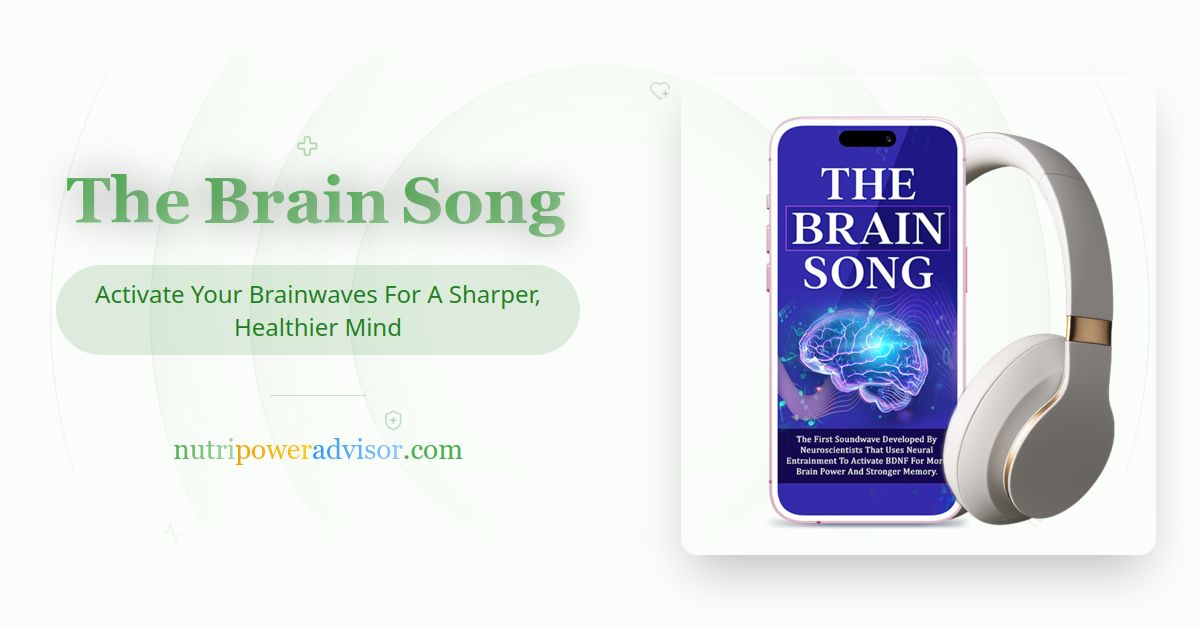
Here is the straightforward bottom line: The Brain Song is a legitimately structured digital audio program built around real neuroscience concepts, sold at a price that makes the downside risk essentially negligible. It is a 17-minute audio track designed to be listened to daily through headphones, delivered instantly as a digital download, priced at $39 one-time with a 90-day money-back guarantee.
The underlying science is genuinely mixed in an interesting way. Brainwave entrainment is a real phenomenon — the brain does synchronize its electrical activity to certain external rhythmic stimuli, and gamma frequencies (30–80 Hz) are legitimately associated with attention and memory processing in neuroscience literature. BDNF (Brain-Derived Neurotrophic Factor) is real and genuinely matters for memory and learning. However, the specific claim that 17 minutes of daily audio listening will meaningfully elevate BDNF levels has not been validated in clinical trials on this particular product.
What this means practically: The Brain Song occupies the same category as guided meditations, binaural beats apps, and digital wellness tools — products that may provide subjective cognitive benefits through relaxation, attention focusing, and brainwave state modulation, but cannot reliably claim pharmaceutical-grade cognitive enhancement.
For $39 one-time with 90 days to test it, the financial risk is about the same as buying a couple of specialty coffees — and the potential upside, if you are someone who benefits from audio-guided cognitive tools, is meaningful.
Rating: 3.8 / 5
| Factor | Score |
|---|---|
| Underlying science (brainwave entrainment) | ⭐⭐⭐⭐ (4/5) |
| Product-specific clinical evidence | ⭐⭐ (2/5) |
| Safety and side effect profile | ⭐⭐⭐⭐⭐ (5/5) |
| Ease of use | ⭐⭐⭐⭐⭐ (5/5) |
| Price point ($39 one-time) | ⭐⭐⭐⭐⭐ (5/5) |
| Risk vs. upside ratio | ⭐⭐⭐⭐⭐ (5/5) |
| Refund policy (90 days) | ⭐⭐⭐⭐⭐ (5/5) |
→ Try The Brain Song for $39 with 90-day guarantee
Table of Contents
- What Is The Brain Song?
- The Science: What Brainwave Entrainment Research Actually Shows
- The BDNF Claim Explained Honestly
- How The Brain Song Is Supposed to Work
- What You Actually Get for $39
- Realistic Results Timeline
- Real User Feedback
- The Low-Risk Economics That Make This Worth Trying
- When The Brain Song Is Not Appropriate
- Who The Brain Song Is Genuinely Right For
- How It Compares to Nootropic Supplements
- The Honest Verdict
- Frequently Asked Questions
What Is The Brain Song?
The Brain Song is a digital audio cognitive enhancement program — not a supplement, not a physical product, not an app with ongoing features. It is a single 17-minute audio file (delivered in .m4a format), plus a PDF user guide, that you listen to once daily through headphones in a quiet environment.
The program was developed by Binaural Technologies and is attributed to Dr. James Rivers, described as a neuroscientist with NASA-related training background. (Some marketing materials use this name as a pseudonym for a qualified neuroscientist — a common practice for digital products to protect the creator's primary professional identity.)
The product is distributed through ClickBank, one of the largest digital marketplace platforms, which provides standardized buyer protection and refund processing. You receive the audio file and PDF via email within 15 minutes of purchase. The charge on your billing statement appears as "CLK*BANK" or "ClickBank" rather than "Brain Song" — which some users appreciate for discretion.
There are no subscriptions, no physical shipping, no recurring charges, and no cycling protocol. You pay once, you get lifetime access to the audio file, and you listen daily if you choose to.
The underlying claim is that brainwave entrainment — the phenomenon where the brain synchronizes its electrical activity to external rhythmic stimuli — can be used to guide the brain into states associated with focus, memory consolidation, and cognitive performance. The Brain Song uses specifically engineered frequencies (particularly in the gamma and theta ranges) delivered through binaural beats and other neuroacoustic techniques.
The Science: What Brainwave Entrainment Research Actually Shows
Let me be straightforward about what the research supports and what it does not. This is where most Brain Song reviews fail their readers — by either overhyping the science or dismissing it entirely. The reality sits in the middle.
What is genuinely established:
Brainwave entrainment is a real neurological phenomenon. When the brain is exposed to rhythmic auditory, visual, or electromagnetic stimuli, its electrical activity does tend to synchronize with the external rhythm — a process called "frequency following response." This has been documented in EEG studies since the 1960s.
Gamma waves are legitimately associated with higher cognition. Neuroscience research has established that gamma-frequency brain activity (30–80 Hz) correlates with attention, memory processing, and learning. People in focused mental states show increased gamma activity; people with cognitive impairment often show reduced gamma activity.
Binaural beats can influence subjective mental states. When you hear slightly different frequencies in each ear through headphones (e.g., 200 Hz in one ear and 210 Hz in the other), the brain perceives a third "beat" frequency (10 Hz in this example). Studies have shown this can produce measurable effects on mood, attention, and relaxation for some users.
Auditory stimulation at gamma frequencies has research support. A 2019 study published in Cell found that 40 Hz auditory stimulation improved cognitive function and reduced amyloid plaques in Alzheimer's disease mouse models. Human trials of gamma sensory stimulation for cognitive enhancement are ongoing.
What is NOT established:
No clinical trial has specifically validated The Brain Song product. The underlying mechanisms have research support, but the specific claim that 17 minutes of daily listening to this particular audio will produce measurable cognitive improvements is not backed by product-specific peer-reviewed trials. This is standard for commercial digital wellness products, but worth stating plainly.
BDNF elevation from audio alone is speculative. The idea that external sound stimulation can meaningfully raise BDNF levels is mechanistically plausible but not robustly established in human trials. Exercise, meditation, sleep, and certain nutrients have stronger BDNF elevation evidence than audio stimulation alone.
Individual response varies enormously. Brainwave entrainment research consistently shows that some users respond strongly while others show minimal changes. Genetic variation, baseline cognitive state, and contextual factors all influence response.
Honest summary: The Brain Song is built on legitimate neuroscience foundations, but the specific efficacy claims require more research to validate. It is defensible as a cognitive wellness tool, not as pharmaceutical-grade therapy.
The BDNF Claim Explained Honestly
BDNF (Brain-Derived Neurotrophic Factor) is worth understanding because it appears prominently in The Brain Song's marketing, and most reviews either accept or dismiss the BDNF claim without explaining what it actually means.
What BDNF actually is: BDNF is a protein produced by neurons that supports survival, growth, and differentiation of nerve cells. It is often called "Miracle-Gro for the brain" because of its role in neuroplasticity — the brain's ability to form new connections and adapt throughout life. Low BDNF levels are associated with depression, cognitive decline, and neurodegenerative conditions.
What is established about raising BDNF: The most evidence-supported interventions for elevating BDNF are:
- Regular aerobic exercise — particularly strong evidence
- High-quality sleep — consistent research support
- Meditation and mindfulness practice — meaningful evidence
- Certain dietary interventions (intermittent fasting, omega-3s) — growing evidence
- Social engagement and learning new skills — indirect but real
Where audio stimulation fits: The claim that specific sound frequencies can elevate BDNF is mechanistically plausible — the brain is responsive to auditory stimulation, and neural activity patterns can influence neurotrophic factor production. However, the evidence base for audio-induced BDNF elevation is much thinner than for exercise, sleep, or meditation.
What this means for your purchasing decision: The Brain Song's BDNF claims are in the realm of "possible, mechanistically defensible, but not robustly proven" rather than "well-established science" or "complete pseudoscience." If you respond well to guided audio tools, The Brain Song may provide some benefit through relaxation, attention focusing, and possibly mild BDNF modulation. If you need validated cognitive enhancement, you are better served by prioritizing exercise, sleep, and meditation as primary interventions.
How The Brain Song Is Supposed to Work
Understanding the intended mechanism helps set realistic expectations:
Step 1: Brainwave entrainment through neural synchronization. When you listen through headphones in a relaxed state, the audio delivers rhythmic patterns that encourage your brain to synchronize its electrical activity with the embedded frequencies. This is the "frequency following response" — a real but modest neurological phenomenon.
Step 2: Guiding the brain through optimal cognitive states. The audio is engineered to cycle through:
- Gamma waves (30–100 Hz) — associated with focused attention, learning, and memory consolidation
- Theta waves (4–8 Hz) — linked to deep relaxation, creativity, and memory encoding
By guiding the brain through these states in a specific sequence, the program aims to create optimal conditions for mental clarity and information retention.
Step 3: Potential BDNF modulation and neuroplasticity support. Through sustained neural activation patterns, the program claims to support BDNF production and neuroplastic changes. This is the most speculative element — mechanistically plausible but not robustly validated in product-specific research.
Step 4: Cumulative effects through consistent practice. Like meditation or exercise, the claimed benefits require consistent daily practice rather than one-time listening. Users who listen once or twice and expect dramatic changes will be disappointed.
What the experience actually feels like: Users typically describe The Brain Song as a pleasant, relaxing 17-minute auditory experience similar to guided meditation with musical elements. Some notice a sense of mental alertness or clarity after listening; others describe a subtle "tuning in" effect. A minority report no perceptible change.
What You Actually Get for $39
Here is the complete package, delivered digitally within 15 minutes of purchase:
1. The Main Audio Track (.m4a format) The centerpiece of the program — a 17-minute audio file engineered with gamma and theta frequency patterns, binaural beats, and neural entrainment architecture. The audio has been reviewed by certified audiologists to ensure safe frequency exposure levels (below 80 dB), making it appropriate for daily listening.
2. The User Guide (PDF format) Explains how the audio works, the science behind it, optimal listening practices, expected experiences, and tips for maximizing results. Takes about 10–15 minutes to read through.
Bonus materials (included with purchase):
- A memory acceleration guide for transferring information into long-term memory
- 15 brain-friendly smoothie recipes featuring ingredients like blueberries and omega-3-rich foods
- Additional cognitive wellness resources
What you do NOT get:
- Physical products (no pills, powders, or devices)
- Subscription services (one-time purchase, lifetime access)
- App features or interactive elements (simple audio file)
- Customer support for cognitive assessment (digital product only)
The total download is small enough to store on any device and can be played through any audio app with headphones. Files are delivered via email link, so you retain permanent access to re-download if needed.
Realistic Results Timeline
Let me set proper expectations, because this is where many users get frustrated:
| Timeframe | What You May Notice |
|---|---|
| First session | Subtle sense of relaxation and mental clarity immediately after; similar feeling to a good meditation session |
| Days 2–5 | Slightly better sleep quality on nights when used before bed; temporary sense of focus afterward |
| Week 1–2 | Building pattern of subjective mental clarity; better mood during/after sessions |
| Week 3–4 | Some users report subtle improvements in memory recall and focus during daily activities |
| Week 4+ | Cumulative effects for responders; full evaluation of whether the program works for your brain |
| Month 2–3 | Plateau point — if you are a responder, benefits consolidate here; non-responders will know |
Important honest truth: The Brain Song is not a stimulant. It does not produce the immediate, noticeable "on/off" effect that caffeine or nootropic supplements can provide. The experience is more similar to meditation — subtle, cumulative, dependent on individual response, and requires consistent practice.
Users who expect dramatic transformation in a single listening session will be disappointed. Users who give it 30 days of consistent daily use will know whether it works for their specific brain chemistry.
Real User Feedback
Based on publicly available reviews across multiple platforms:
Positive patterns consistently reported:
- Improved focus and mental clarity during or shortly after listening sessions
- Better sleep quality when used earlier in the evening
- Subtle reduction in perceived brain fog
- Users report their brain feels "tuned in" or "aligned" after sessions
- Pleasant listening experience — many users actually enjoy the audio itself
- No side effects, no jitters, no digestive issues (key advantage vs. nootropic supplements)
- Discreet and private — no one needs to know you are using it
Complaints and negative feedback patterns:
- "Subtle" effects mean some users perceive no change at all, even after consistent use — individual variation is real and significant
- Some users expected dramatic transformations that are not realistic for any cognitive tool
- A minority of users find certain frequency ranges uncomfortable or distracting
- Product is only available through the official website, which some prefer not to use
- Individual response varies — what works for one person may produce minimal effect for another
- Users with pre-existing tinnitus sometimes report the audio aggravates symptoms (see disclaimer below)
Honest pattern analysis: Positive reviews cluster around users who approached the program with realistic expectations and used it consistently for 4+ weeks. Negative reviews disproportionately come from users who expected rapid, dramatic cognitive transformation or who tried it for less than 2 weeks.
The Low-Risk Economics That Make This Worth Trying
This is the section that may be most decision-relevant. Most supplement reviews have to justify $49–$79 monthly commitments. The Brain Song has fundamentally different economics that change the risk calculus.
The financial reality:
- $39 one-time payment — less than three months of most supplement subscriptions
- Lifetime access — no recurring charges, no subscription trap
- 90-day money-back guarantee — ClickBank-processed, industry-standard refund protection
- No shipping cost — digital delivery within 15 minutes
- No restocking fees, no return shipping — nothing physical to return
The opportunity cost analysis:
If The Brain Song works for you and provides even modest daily cognitive benefit for the next 2+ years (which is realistic for lifetime digital access), the per-day cost becomes trivial — less than a penny per use.
If it does not work for you, you can request a full refund within 90 days. You lose nothing but the 17 minutes per day you spent testing it — and even those 17 minutes were spent in a relaxed, audio-guided state that provided at least the benefits of quiet listening time.
The comparison with alternatives:
- Nootropic supplements: $30–$100+/month recurring, with ingredient quality concerns and potential side effects
- Meditation apps with premium subscriptions: $70–$100/year recurring
- Cognitive behavioral therapy for cognitive concerns: $150+ per session
- Prescription nootropics (e.g., modafinil): require medical evaluation and have side effect profiles
The honest pitch: For $39 one-time with 90 days to verify it works for your specific brain, this is among the lowest-financial-risk cognitive enhancement trials available. Not a miracle, not a replacement for lifestyle fundamentals like sleep and exercise, but a legitimate digital tool at a price point that essentially removes the "what if it doesn't work" concern.
→ Get The Brain Song for $39 with 90-day guarantee
When The Brain Song Is Not Appropriate
In the spirit of honest, responsible recommendations, here are situations where this product should be avoided or used only with professional guidance:
Avoid The Brain Song if you have:
- Diagnosed tinnitus or significant hearing sensitivity — certain audio frequencies may aggravate tinnitus symptoms; consult an audiologist before use
- Epilepsy or seizure disorders — brainwave entrainment stimulation may theoretically trigger seizures in susceptible individuals (though this is rare with audio-only stimulation); discuss with your neurologist before use
- Severe auditory processing disorders — the program's frequencies may be uncomfortable or counterproductive
- Active psychiatric conditions requiring medical treatment — audio tools are not substitutes for proper mental health care
- Pacemaker or implanted medical devices — while audio stimulation is unlikely to interact, consult your physician
- Pregnancy — not because of established risk, but because studies on prenatal audio stimulation effects are limited
Use with caution if you:
- Are taking medications for cognitive or mood conditions — discuss with your prescribing physician
- Have ear pain, infections, or recent ear surgery
- Are under 18 (formulated and researched for adult use)
Cognitive concerns that require medical evaluation, not audio tools:
- Sudden or progressive memory loss
- Disorientation, confusion, or significant changes in mental function
- Symptoms suggesting stroke, TIA, or acute neurological event
- Depression or anxiety severe enough to interfere with daily function
- Any cognitive symptoms affecting work, relationships, or safety
The Brain Song is a wellness tool, not a medical treatment. Respect the distinction.
Who The Brain Song Is Genuinely Right For
The Brain Song makes sense if you are:
✅ An adult (25–70) experiencing mild cognitive concerns — occasional brain fog, difficulty focusing on demanding tasks, wanting to feel mentally sharper
✅ Hesitant about nootropic supplements due to side effects, cost, drug interactions, or uncertainty about ingredients
✅ Curious about brainwave entrainment and digital cognitive tools
✅ A meditator or mindfulness practitioner looking to add structured audio support to your practice
✅ A professional, student, or knowledge worker dealing with information overload and wanting enhanced focus tools
✅ A senior interested in proactive cognitive wellness without the complexity of supplement protocols
✅ Value the low-risk economics — $39 one-time with 90-day refund means essentially nothing to lose
✅ Enjoy guided audio experiences and have a pair of decent headphones
The Brain Song is probably not the right fit if you:
❌ Have diagnosed tinnitus or significant auditory sensitivity
❌ Have epilepsy or seizure disorders — consult a neurologist first
❌ Need pharmaceutical-grade cognitive enhancement for severe attention or memory conditions
❌ Expect immediate, dramatic results similar to stimulants or prescription medications
❌ Are unwilling to commit 17 minutes daily for 4+ weeks to fairly evaluate it
❌ Have concerning cognitive symptoms that warrant medical evaluation rather than wellness tools
❌ Prefer physical products and tangible experiences over digital ones
❌ Are skeptical of anything frequency-based on principle — the evidence is real but mixed, and your skepticism may prevent fair evaluation
How It Compares to Nootropic Supplements
| The Brain Song | Typical Nootropic Supplement | |
|---|---|---|
| Delivery | Digital audio (17 min/day) | Daily capsules |
| Mechanism | Brainwave entrainment, sound-based stimulation | Ingestion of compounds affecting neurotransmitters |
| Cost | $39 one-time | $30–$100+ monthly recurring |
| Side effects | Minimal (rare audio sensitivity) | Common (headaches, jitters, digestive issues) |
| Drug interactions | None | Often significant concerns |
| Long-term access | Lifetime (own the file) | Requires continuous purchases |
| Research base | Brainwave entrainment real; product-specific limited | Ingredient-specific, varies widely |
| Onset | Subtle, during/after sessions | Usually within 30–60 minutes of capsule |
| Best as | Complementary cognitive wellness tool | Primary cognitive support |
| Portability | Requires headphones and quiet time | Take capsule anywhere |
Honest positioning: The Brain Song is not competing directly with nootropic supplements. It occupies a different category — digital, drug-free, experiential cognitive wellness. For some users, it works as a standalone tool. For others, it complements a broader cognitive health strategy that includes supplements, sleep, exercise, and nutrition.
The most compelling positioning is as a low-risk, drug-free complement to lifestyle fundamentals — not as a replacement for them.
The Honest Verdict
The Brain Song is a legitimately structured digital cognitive wellness program with genuine neuroscience foundations, delivered at a price point that makes the financial risk effectively negligible.
The underlying science — brainwave entrainment, gamma frequency cognitive effects, neural synchronization — is real, even if the specific product's clinical validation is limited. The delivery format is simple and accessible. The time commitment (17 minutes daily) is modest. The side effect profile is minimal for users without auditory sensitivities. And the 90-day money-back guarantee through ClickBank makes genuine testing possible without financial commitment.
Will it transform your cognitive function? Probably not in the dramatic way marketing suggests. Will some users experience meaningful subjective improvements in focus, clarity, sleep quality, and mental calm? Based on the underlying science and user feedback patterns, yes — for responders who use it consistently.
This is the reality: The Brain Song may provide genuine subjective cognitive benefits for perhaps 40-60% of consistent users, modest benefits for another 20-30%, and minimal perceptible effects for the remaining minority. At $39 one-time with 90 days to verify, the odds of ending up with a tool that helps you are reasonable, and the downside is essentially limited to the time you spent testing it.
For anyone curious about brainwave entrainment, hesitant about nootropic supplements, or simply looking for a drug-free cognitive wellness tool, The Brain Song is worth the low-risk trial.
Final Rating: 3.8 / 5
- Underlying science: ✅ Real neuroscience principles
- Product-specific validation: ⚠️ Limited clinical trials
- Safety profile: ✅ Excellent (rare auditory sensitivity only)
- Side effects: ✅ Essentially none for most users
- Ease of use: ✅ Simple, passive, low-effort
- Price point: ✅ $39 one-time is exceptional
- Refund policy: ✅ 90 days via ClickBank
- Risk/reward ratio: ✅ Among the best in cognitive tools
→ Try The Brain Song for just $39
Frequently Asked Questions
Is The Brain Song a scam? No. It is a legitimate digital product sold through ClickBank, a well-established digital marketplace with transparent refund policies. The science it is built on (brainwave entrainment, gamma frequencies, BDNF) is real, though the specific product has not undergone its own clinical trials. At $39 one-time with 90-day guarantee, the structure itself protects against scam concerns — you can get your money back if unsatisfied.
How quickly will I see results? Subtle effects may appear during or immediately after the first listening session — typically a sense of relaxation or focus. More substantial effects accumulate over 2–4 weeks of consistent daily use. If you are a responder, you will know within the 90-day guarantee window whether the program works for you.
Do I need special headphones? No. Standard over-ear or in-ear headphones will work for the binaural beats component. The audio has been engineered for accessibility across consumer headphone options. Higher-quality headphones may provide a more immersive experience but are not required.
Can I listen while working or driving? The program is most effective during passive, relaxed listening with closed eyes or minimal distractions. Listening while actively working may reduce both work effectiveness and program benefit. Do not listen while driving — the program encourages relaxation states that are not compatible with active driving attention.
What if I have tinnitus? Consult an audiologist before use. Brainwave entrainment audio can potentially aggravate tinnitus symptoms for some individuals with this condition. The 90-day guarantee allows refund if the audio is unsuitable for your auditory profile.
Can I use The Brain Song alongside nootropic supplements or medications? There are no chemical interactions since the product is audio-only. However, you should continue any prescribed medications as directed by your physician. The Brain Song is not a substitute for medical treatment of any diagnosed condition.
Does it work for ADHD or other diagnosed conditions? The Brain Song is a wellness tool, not a treatment for diagnosed conditions. If you have ADHD, depression, anxiety, or any clinical cognitive condition, work with qualified mental health professionals on evidence-based treatments. The Brain Song may be used as a complementary practice only with physician awareness.
What exactly will appear on my credit card statement? The charge will show as "CLK*BANK" or "ClickBank" — not "Brain Song" — which some users prefer for privacy. This is standard for ClickBank-processed products.
Can I share the audio file with family members? The file is for personal use per the terms of purchase. Each user technically needs their own license, though enforcement is practically minimal for a digital product. Check official terms on the product page.
How do I request a refund? Contact ClickBank customer support (listed in your purchase confirmation email) within 90 days of purchase. Refunds are processed according to ClickBank's standard policy — typically within a few business days. No complicated return process since nothing physical needs to be shipped back.
→ Visit the official The Brain Song website
This review is for informational and educational purposes only and does not constitute medical advice. The Brain Song is a digital audio wellness product and has not been evaluated by the FDA to diagnose, treat, cure, or prevent any disease — including dementia, Alzheimer's disease, cognitive decline, ADHD, depression, anxiety, or any other medical condition. Always consult a qualified healthcare professional for concerning cognitive symptoms, diagnosed conditions, or before starting any new wellness practice, particularly if you have tinnitus, seizure disorders, hearing conditions, or take medications affecting mental function. Individual results from audio-based cognitive tools vary significantly. Brainwave entrainment is a real neurological phenomenon with mixed clinical evidence for specific cognitive enhancement claims.
Tags: the brain song review, brain song memory program, does the brain song work, brain song complaints, binaural beats memory 2026, brainwave entrainment review, brain song scam or legit, james rivers brain song, BDNF audio program