Audifort Review (2026): Does This Hearing Support Formula Actually Work? Honest Evidence-Based Analysis
Disclosure: This article contains affiliate links. If you purchase through them, we may earn a commission at no extra cost to you. Our editorial assessments are not influenced by these relationships — we cover both strengths and limitations of every product we review.
Important Medical Disclaimer: This review is for informational purposes only and is not medical advice. Hearing loss and tinnitus are medical conditions that require proper evaluation by an audiologist or ENT (otolaryngologist) specialist. No dietary supplement — including Audifort — can replace proper medical diagnosis and treatment. If you are experiencing sudden hearing loss, severe tinnitus, pain, drainage, or dizziness, stop reading this article and contact a healthcare professional immediately.
Quick Verdict
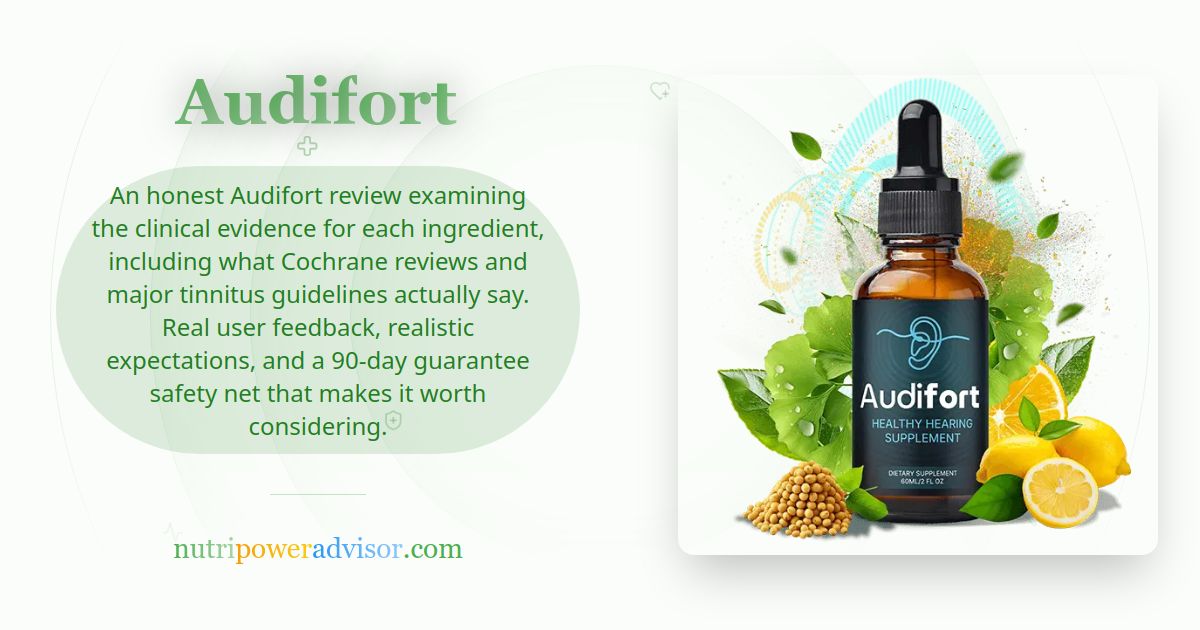
Here is the honest bottom line: Audifort is a well-formulated nutritional hearing support liquid with 20+ ingredients targeting inner ear circulation, oxidative stress, and nerve function. The formulation logic is coherent — these are legitimately the three pathways most relevant to age-related hearing changes and tinnitus. The liquid dropper format allows for faster absorption than capsules, and the ingredient selection shows thought rather than random herbalism.
But honesty compels addressing what marketing does not: The clinical evidence for supplements treating tinnitus is complicated. Major medical organizations including the American Academy of Otolaryngology and European tinnitus guidelines have historically recommended against Ginkgo biloba (Audifort's most-discussed ingredient) for primary tinnitus treatment. A 2022 Cochrane review concluded Ginkgo "may have little to no effect compared to placebo" for tinnitus, though evidence was noted as "very uncertain."
This does not make Audifort a scam. It does mean you should approach it with calibrated expectations: as a nutritional support product for general auditory wellness, not as a tinnitus cure. For men and women experiencing mild age-related hearing changes, occasional ringing, or who want comprehensive nutritional support for hearing health — and who can commit to 90+ days of consistent use — Audifort is a reasonable trial, particularly given the 90-day money-back guarantee that makes the financial risk manageable.
Rating: 3.6 / 5
| Factor | Score |
|---|---|
| Ingredient selection logic | ⭐⭐⭐⭐ (4/5) |
| Liquid dropper delivery | ⭐⭐⭐⭐ (4/5) |
| Nutritional foundation support | ⭐⭐⭐⭐ (4/5) |
| Tinnitus-specific clinical evidence | ⭐⭐ (2/5) |
| Marketing honesty | ⭐⭐⭐ (3/5) |
| Value at 6-bottle pack ($49/bottle) | ⭐⭐⭐⭐ (4/5) |
| Refund policy (90 days) | ⭐⭐⭐⭐ (4/5) |
→ Check the current Audifort offer with 90-day guarantee
Table of Contents
- What Is Audifort?
- The Honest Truth About Hearing Supplements and Tinnitus
- The Three Nutritional Pathways Audifort Targets
- Key Ingredients: What the Research Shows
- The Ginkgo Biloba Question You Need to Understand
- The Liquid Dropper Format Advantage
- Realistic Results Timeline
- Real Customer Feedback
- When to See an Audiologist Instead
- Who Audifort Is Genuinely Right For
- Pricing and the 90-Day Guarantee
- The Honest Verdict
- Frequently Asked Questions
What Is Audifort?
Audifort is a liquid dietary supplement formulated as hearing and auditory health support. It comes in a dropper bottle with the recommended protocol of one dropper in the morning before breakfast and another before lunch — taken sublingually (under the tongue), dissolved in water, or mixed with juice. Each dropper contains approximately 15 drops of liquid.
The product was developed by Andrew Ross and is sold exclusively through the official website via BuyGoods (a legitimate digital marketplace platform). It is manufactured in the United States in an FDA-registered, GMP-certified facility, is non-habit-forming, and contains over 20 plant-based ingredients, vitamins, and minerals.
The formula targets three interconnected aspects of auditory health: inner ear circulation (blood flow to cochlear hair cells), oxidative stress protection (antioxidant defense for delicate auditory structures), and nerve function support (B-vitamins and minerals for nerve signal transmission). Each of these is a legitimate mechanistic target based on current research in hearing health — whether the specific doses in Audifort produce clinically meaningful effects is the honest question this review will help you evaluate.
Unlike hearing aids (which amplify external sound) or tinnitus retraining therapy (which teaches the brain to habituate), Audifort operates at the nutritional level — attempting to support the underlying biological conditions that enable healthy hearing, rather than masking symptoms.
The Honest Truth About Hearing Supplements and Tinnitus
This section will not appear in most Audifort reviews because it complicates the sales narrative. I am including it because you deserve honesty before spending money, and because the 90-day guarantee means you can still try the product after reading the full picture.
What current medical science says about tinnitus treatment:
Tinnitus has many causes — noise exposure, age-related hearing decline, medications, TMJ dysfunction, vascular issues, and various neurological conditions. There is no single treatment that works for all tinnitus. The American Academy of Otolaryngology's Clinical Practice Guideline (Tunkel 2014) and the European tinnitus guideline (Cima 2019) both explicitly recommend against Ginkgo biloba for tinnitus treatment, citing insufficient evidence of efficacy.
A 2022 Cochrane systematic review of 12 studies with 1,915 participants concluded that Ginkgo biloba "may have little to no effect compared to placebo" for tinnitus severity, though evidence was rated as "very uncertain."
What this means practically:
No supplement should be marketed as a tinnitus cure. Audifort is careful to position itself as "hearing support" rather than claiming to cure tinnitus — a legally and ethically correct positioning.
The nutritional logic is still defensible. Even if Ginkgo biloba's specific evidence is mixed, the underlying mechanisms Audifort targets (circulation, oxidative stress, nerve support) are legitimately implicated in hearing health. Addressing these through nutrition may support overall auditory wellness even if it cannot reliably eliminate tinnitus.
Some evidence exists for the specific Ginkgo extract EGb 761®. Published studies of this standardized extract (not generic Ginkgo) have shown positive effects in 8 randomized controlled trials. Whether the Ginkgo in Audifort matches the EGb 761® standardization profile is not disclosed — this is a transparency gap.
Individual response varies enormously. Tinnitus has multiple causes, and a supplement that helps one person may not help another. The 90-day guarantee means you can test individual response without financial risk.
Honest expectation calibration: Audifort is best understood as a nutritional support product that may help some users with mild-to-moderate auditory wellness concerns, particularly when those concerns are related to circulatory, oxidative, or nerve-nutrient factors. It is not a treatment for diagnosed hearing loss, severe tinnitus, or any medical condition requiring professional care.
The Three Nutritional Pathways Audifort Targets
Pathway 1: Inner Ear Circulation
The cochlea — the spiral-shaped organ in your inner ear containing hair cells that detect sound — requires constant, robust blood flow to function. These hair cells are metabolically demanding and cannot access oxygen and nutrients any other way. Restricted microcirculation to the cochlea is one of the most-studied contributors to age-related hearing decline and tinnitus.
How Audifort addresses this: Circulation-supporting ingredients including Ginkgo Biloba, Hawthorn Berry, Garlic Extract, and Green Tea aim to support healthy microcirculation and nitric oxide production, potentially improving nutrient delivery to auditory tissues.
Pathway 2: Oxidative Stress Protection
The inner ear's hair cells are extraordinarily sensitive to oxidative damage. Free radicals generated by noise exposure, aging, and metabolic stress can damage these cells — and unlike most cells in your body, hair cells do not regenerate once destroyed in humans. Antioxidant protection is therefore preventive rather than restorative, but it is one of the few interventions with a plausible mechanism for slowing hearing decline.
How Audifort addresses this: Grape Seed Extract (rich in proanthocyanidins), Green Tea catechins, Vitamin C, and additional antioxidant compounds aim to neutralize free radicals before they can damage hair cells.
Pathway 3: Nerve Function and Signal Transmission
Tinnitus is increasingly understood as a neural phenomenon — the brain's auditory processing centers creating phantom sound signals in response to compromised input from the ear. Supporting nerve sheath integrity, neurotransmitter balance, and reducing neural overactivity are mechanistically relevant approaches.
How Audifort addresses this: B-vitamin complex (B6, B9, B12) for nerve myelin integrity, GABA for calming neural overactivity, magnesium for nerve signal transmission, and zinc (concentrated in prostate tissue and important for nerve function).
Key Ingredients: What the Research Shows
Ginkgo Biloba
The single most-discussed hearing supplement ingredient, and the one with the most complicated evidence. Mechanistically, Ginkgo enhances microcirculation by increasing red blood cell deformability and decreasing blood viscosity — and animal studies show it specifically increases blood flow in the cochlea. It also provides potent antioxidant protection for mitochondrial function.
The clinical evidence reality: As covered above, major tinnitus guidelines recommend against Ginkgo for primary tinnitus. The 2022 Cochrane review found little to no effect vs. placebo. However, studies specifically on the standardized EGb 761® extract have shown positive effects in 8 RCTs, and a 2024 retrospective cohort study published in Frontiers in Neurology found that Ginkgo biloba extract prescriptions were associated with less frequent repeat visits to ENT doctors due to tinnitus compared to pentoxifylline.
The honest summary: Ginkgo biloba's effect for tinnitus is real but small for some users, null for others, and depends significantly on extract standardization. Its inclusion in Audifort is mechanistically defensible but not a guaranteed benefit.
Grape Seed Extract
Rich in oligomeric proanthocyanidins (OPCs), which have powerful antioxidant activity approximately 20 times stronger than vitamin C and 50 times stronger than vitamin E in some measures. Animal studies show grape seed proanthocyanidins protect against noise-induced hearing loss by reducing oxidative damage to cochlear hair cells. Human evidence specifically for hearing is limited but mechanistically strong.
Green Tea Extract (EGCG)
Green tea's epigallocatechin gallate (EGCG) is one of the most-studied plant polyphenols. It provides antioxidant protection, has anti-inflammatory effects, and supports healthy circulation through nitric oxide pathways. Animal studies suggest EGCG may protect against cisplatin-induced ototoxicity. Real-world relevance for general hearing health is supportive rather than primary.
GABA (Gamma-Aminobutyric Acid)
GABA is the primary inhibitory neurotransmitter in the brain. In the context of tinnitus, overactive auditory neural firing is hypothesized to generate phantom sound signals. GABA supplementation aims to calm this hyperactivity. However, GABA's ability to cross the blood-brain barrier in meaningful amounts when taken orally is debated — most of its benefits may come through the enteric nervous system and vagal signaling rather than direct CNS action.
Magnesium
One of the most-studied minerals for hearing protection. A 2004 study on military recruits found that magnesium supplementation reduced the incidence of permanent noise-induced hearing loss by approximately 50% during basic training. Magnesium calms NMDA receptor overactivity — the same pathway implicated in noise damage and tinnitus generation. This is a genuinely evidence-supported inclusion.
Zinc
Zinc deficiency has been linked to tinnitus in multiple observational studies. Zinc is essential for nerve function, immune regulation, and is concentrated in cochlear tissues. Supplementation at 15–30mg daily addresses the deficiency common in adults over 60, which may be particularly relevant for tinnitus sufferers.
B-Vitamin Complex (B6, B9, B12)
Vitamin B12 deficiency specifically has been associated with tinnitus in multiple studies. B-vitamins support nerve myelin integrity, reduce homocysteine (which damages blood vessels), and are essential for nerve signal transmission. Methylated forms (methylcobalamin for B12, methylfolate for B9) have better bioavailability. Addressing B12 deficiency in tinnitus patients has shown symptomatic improvement in some clinical studies.
Alpha Lipoic Acid (ALA)
A universal antioxidant that works in both water-soluble and fat-soluble environments, and notably regenerates other antioxidants (vitamins C, E, glutathione). Research suggests potential protection against noise-induced hearing loss and neural damage. Less directly studied for tinnitus but mechanistically supportive.
N-Acetyl Cysteine (NAC)
Glutathione precursor with strong research for protecting against noise-induced hearing loss. Military and occupational health studies have shown NAC pretreatment reduces cochlear damage from loud noise exposure. This is arguably one of the most evidence-supported ingredients for preventive hearing protection, though not directly for tinnitus reversal.
Maca Root, Capsicum, Gymnema Sylvestre, Hawthorn Berry
These function as secondary support ingredients — Maca for energy, Capsicum for circulation and inflammatory response, Gymnema for nerve support, and Hawthorn for cardiovascular health. Each has traditional use history and some research, but their role in Audifort is supportive rather than primary.
The Ginkgo Biloba Question You Need to Understand
Let me address this directly because no other Audifort review does, and it's the most important conversation you need to have with yourself before purchasing.
The question: "If Ginkgo biloba doesn't reliably treat tinnitus according to Cochrane and major guidelines, why is it in Audifort?"
The honest, multi-layered answer:
Layer 1: Ginkgo's mechanisms (circulation, antioxidant, anti-inflammatory) are legitimately relevant to hearing health beyond tinnitus specifically. It may help general auditory wellness through these pathways even if it does not reliably reduce established tinnitus.
Layer 2: Extract standardization matters enormously. Studies on the standardized EGb 761® extract have consistently shown positive effects — 8 RCTs with statistically significant results. Generic Ginkgo products (which most supplements use) have mixed evidence because they contain widely varying concentrations of the active terpene lactones and flavone glycosides.
Layer 3: Audifort contains 20+ ingredients, not just Ginkgo. The formula's potential value is the combined effect of multiple ingredients targeting complementary pathways — not Ginkgo as a standalone intervention.
Layer 4: Individual variation is real. Tinnitus has multiple underlying causes, and some users report meaningful improvement with Ginkgo-containing products while others report none. This is not just placebo — it reflects genuine individual differences in response.
What this means for your purchase decision:
If you are a person with mild-to-moderate auditory concerns who wants to support hearing health through nutritional means, Audifort's mechanism makes sense. Expect modest, gradual improvement rather than dramatic cure.
If you have severe tinnitus that significantly affects your quality of life, Audifort should be treated as a supportive adjunct — not a primary treatment. See an audiologist or ENT specialist for proper evaluation.
The 90-day money-back guarantee means you can test your individual response without financial risk — which is perhaps the most honest argument for trying it.
The Liquid Dropper Format Advantage
The liquid dropper delivery is a genuine formulation choice worth understanding.
Why liquid over capsules:
- Faster absorption: No capsule shell to dissolve before active ingredients release
- Sublingual option: Drops under the tongue partially bypass first-pass liver metabolism for some ingredients
- No fillers required: Capsules need binders, magnesium stearate, and flow agents that liquid formulas avoid
- Dose flexibility: Users can adjust exact drop count if needed based on individual response
Why this matters specifically for hearing supplements: The blood-brain barrier and the blood-labyrinth barrier (the biological barrier protecting the inner ear) are both selective. Ingredients need adequate bioavailability to reach auditory tissues in therapeutically meaningful concentrations. Liquid formulas with quick absorption may have an edge here, though this advantage is theoretical rather than directly proven.
The trade-off: Liquids have shorter shelf life than capsules (6–24 months typically), can oxidize if left open, and require consistent daily remembering because the taste is more noticeable. For most users, these are minor considerations.
Realistic Results Timeline
Let's set honest expectations based on the biological mechanisms at play:
| Timeframe | What You May Notice |
|---|---|
| Week 1 | Subtle energy changes from B-vitamin and mineral support. No auditory changes yet |
| Week 2–3 | Reduced background tension/stress (GABA, magnesium effects). Some users report slight improvement in sleep quality |
| Week 4–6 | Circulation improvements becoming effective. Some users report slight reduction in ringing intensity. Others note no change yet |
| Week 6–10 | Nutritional foundation effects consolidating. Users who respond typically notice meaningful changes in this window |
| Month 3 | Full evaluation window. If you are a responder, this is when benefits are clearest. Non-responders will know by this point |
| Month 4+ | Some users continue to notice gradual improvements; others plateau |
The critical honest truth: Users who quit at week 4 because they see no dramatic change are stopping during the biological adaptation phase but before cumulative effects have had time to manifest. The 90-day guarantee is specifically designed around this reality — and the 3 to 6-bottle packages align with realistic evaluation timelines.
If you have tinnitus and expect it to vanish in days or a few weeks, you will be disappointed. If you expect gradual nutritional support with realistic patience, your expectations are properly calibrated.
Real Customer Feedback
Based on publicly available reviews across multiple platforms:
Consistent positive patterns:
- Improved sleep quality within 2–4 weeks — consistent with GABA, magnesium, and B-vitamin effects on nervous system relaxation
- Reduced tinnitus intensity at 6–10 weeks for subset of users — the typical response window for nutritional interventions in tinnitus
- Better clarity in conversations in noisy environments — may reflect cumulative circulation and oxidative stress improvements
- Reduced "phantom sound" awareness at bedtime — often the most quality-of-life-impacting aspect of mild tinnitus
- Increased general energy and mental sharpness — reflecting B-vitamin and circulatory benefits
Complaints and negative patterns:
- Results timeline frustration — users expecting fast results (2-3 weeks) are often disappointed. This is expectation miscalibration, not product failure
- Counterfeit products from unauthorized sellers cause many "doesn't work" complaints — purchase only through the official site
- No effect for severe cases — as expected, users with long-standing severe tinnitus or significant structural hearing loss are less likely to see dramatic changes
- Liquid format preference — some users simply prefer capsules over drops
- Price point at single-bottle purchase ($79) is steep; the value proposition improves dramatically at 6 bottles ($49/bottle)
Notable pattern worth highlighting: Positive reviews cluster around the 30–90 day mark — aligning with Audifort's stated biological mechanism timeline. Negative reviews disproportionately come from users who tried for 2–4 weeks and quit early. This pattern is consistent with realistic expectations rather than dramatic marketing promises.
When to See an Audiologist Instead
This is genuinely important and deserves emphasis because self-treatment for hearing concerns can delay appropriate medical care.
See an audiologist or ENT specialist — do not rely on Audifort as primary intervention — if:
- Sudden hearing loss (within 72 hours) — this is a medical emergency; steroids given within 2 weeks may restore hearing
- Severe or worsening tinnitus affecting sleep, work, or mental health
- Pulsatile tinnitus (rhythmic, matching your heartbeat) — may indicate vascular issues requiring evaluation
- Tinnitus with dizziness, vertigo, or balance problems — may indicate Ménière's disease or other inner ear conditions
- One-sided (unilateral) tinnitus or hearing loss — requires ruling out acoustic neuroma and other structural causes
- Pain, drainage, or fullness in the ear — typically indicates infection or mechanical issues
- Hearing loss affecting your ability to communicate, work, or maintain safety
- Child with hearing concerns — all pediatric hearing concerns require immediate professional evaluation
Hearing aids and cochlear implants are medical devices with proven efficacy for appropriate candidates. No supplement can replace these for users with substantial hearing loss. The most productive approach to hearing health is typically: medical evaluation first, then nutritional support as adjunct.
Who Audifort Is Genuinely Right For
Audifort is a sensible trial if you are:
✅ Adults 40-70 experiencing mild, early age-related hearing changes — subtle trouble in noisy environments, occasional ringing, interest in prevention
✅ Proactive about hearing health and want nutritional support alongside any medical care you are receiving
✅ Experiencing mild-to-moderate occasional tinnitus that has been medically evaluated and does not require primary medical intervention
✅ Willing to commit to 90+ days of consistent use before evaluating results
✅ Value the 90-day money-back guarantee and want a low-risk trial of nutritional hearing support
✅ Exposed to loud noise regularly (musicians, construction workers, hunters) and want preventive antioxidant support for cochlear hair cells
✅ Have family history of hearing decline and want proactive nutritional intervention
Audifort is probably not the right fit if you:
❌ Have sudden hearing loss or recent significant tinnitus onset — see an audiologist immediately
❌ Have severe, debilitating tinnitus affecting your quality of life — this requires specialist care
❌ Expect rapid results in weeks rather than months — realistic timeline is 60-90+ days
❌ Have pulsatile tinnitus, unilateral tinnitus, or tinnitus with vertigo — these require medical evaluation
❌ Take anticoagulant medications (warfarin, rivaroxaban, apixaban, clopidogrel) — Ginkgo biloba has documented antiplatelet effects; discuss with your physician
❌ Are scheduled for surgery within 2 weeks — discontinue any Ginkgo-containing supplement per surgical guidelines
❌ Are pregnant, nursing, or under 18
❌ Have diagnosed severe hearing loss or structural ear conditions requiring medical or surgical intervention
Pricing and the 90-Day Guarantee
Based on publicly available information at time of writing:
| Package | Price per Bottle | Total | Best For |
|---|---|---|---|
| 1 Bottle (30-day supply) | $79 | $79 + shipping | Skeptics who want to try before committing |
| 3 Bottles (90-day supply) | $59 | $177 + bonuses | Minimum realistic commitment for evaluation |
| 6 Bottles (180-day supply) | $49 | $294 + free shipping + 2 bonus eBooks | Best value — covers full evaluation with buffer |
The 90-day money-back guarantee is important to understand properly.
For a product whose benefits require 60–90 days to fully manifest, a 90-day guarantee means you can complete the full evaluation cycle and still have time to request a refund if unsatisfied. This is a reasonable alignment between guarantee length and biological timeline.
The 6-bottle package represents the clearest value proposition:
- Lowest per-bottle cost ($49 vs. $79 for single bottle)
- Free shipping included
- Two bonus digital guides
- Covers 180 days — the full evaluation with buffer time
For anyone seriously committing to testing Audifort, the 3-bottle package is the realistic minimum and the 6-bottle package is the optimal value.
→ See the current Audifort offer (save up to $828 on 6-bottle pack)
The Honest Verdict
Audifort occupies a defensible position in the nutritional hearing support category. The ingredient selection shows genuine thought — targeting three legitimate pathways (circulation, oxidative stress, nerve function) rather than random herbalism. The liquid dropper format has practical bioavailability advantages. The 90-day guarantee aligns with realistic biological timelines. And the company does not make overt cure claims — positioning as "hearing support" rather than tinnitus elimination.
The limitations are honest ones: the clinical evidence for supplements treating established tinnitus is genuinely mixed, with major medical guidelines historically skeptical of Ginkgo biloba specifically. Individual response varies significantly, and this product will not work for everyone. It should not be treated as a substitute for proper medical evaluation of hearing concerns.
The best way to think about Audifort: It is a nutritional foundation product for auditory wellness. If you have mild concerns and realistic expectations, it may help. If you are willing to commit 90 days and the 90-day guarantee makes the financial risk acceptable, the trial is reasonable. If you expect dramatic cures for severe conditions, adjust your expectations or seek medical care first.
At $49/bottle in the 6-pack — roughly $1.60 per day — this is a financially reasonable trial for comprehensive nutritional hearing support, particularly with the guarantee protecting against downside.
Final Rating: 3.6 / 5
- Ingredient selection: ✅ Thoughtful, multi-pathway approach
- Mechanisms targeted: ✅ Legitimate (circulation, oxidative stress, nerve)
- Specific tinnitus evidence: ⚠️ Mixed; major guidelines skeptical of Ginkgo
- Liquid dropper format: ✅ Practical absorption advantage
- Marketing honesty: ⚠️ Some overreach, but no overt cure claims
- Value at 6-bottle pack: ✅ Reasonable per-day cost
- 90-day guarantee: ✅ Adequate for full evaluation cycle
- Appropriate use cases: ✅ Mild-to-moderate concerns, preventive support
→ Try Audifort with the 90-day guarantee
Frequently Asked Questions
Will Audifort cure my tinnitus? No. No supplement can cure tinnitus, and Audifort does not claim to do so. It is positioned as nutritional support for hearing health. Some users report reduced tinnitus intensity after 6–10 weeks of consistent use, but responses vary significantly based on tinnitus cause, severity, and individual factors. If tinnitus is affecting your quality of life, see an audiologist for proper evaluation.
How long does it take to see results? Sleep and stress-related improvements may appear within 2–4 weeks (magnesium, GABA, B-vitamin effects). Circulation and auditory effects typically at 4–8 weeks. Full evaluation requires 90 days of consistent use. Users who quit at 4 weeks often quit during the exact window when foundational effects are establishing but before cumulative benefits manifest.
Is Audifort safe to take with my medications? Audifort contains Ginkgo biloba, which has documented antiplatelet effects and can interact with anticoagulants (warfarin, rivaroxaban, apixaban, clopidogrel) and antiplatelet medications (aspirin, clopidogrel). Discuss with your physician before use if you take any blood-thinning medications or are scheduled for surgery within 2 weeks. Also consult your doctor if you have bleeding disorders or uncontrolled blood pressure.
Why doesn't Audifort list exact ingredient dosages? This is a legitimate transparency gap. Many supplement companies use "proprietary blend" language to protect formulations from competitors, but it prevents consumers from comparing doses against published research. For informed supplement users, this is a real limitation — though it is standard in this product category.
Can Audifort reverse hearing loss? No. Human cochlear hair cells do not regenerate once damaged. Audifort may support preservation of remaining hearing function through antioxidant and circulatory mechanisms, but it cannot restore lost hearing. For significant hearing loss, medical evaluation and hearing aids are the evidence-based interventions.
Is the 90-day guarantee really that simple? Yes. BuyGoods processes refunds per their standard policy, and the 90-day window starts from purchase date. Keep your order confirmation. If you are unsatisfied for any reason within 90 days, contact customer support for a full refund — including partially used bottles.
Where should I purchase Audifort to avoid counterfeits? Through the official website only. Audifort is not sold on Amazon, Walmart, eBay, or retail stores. Purchases through unauthorized channels are likely counterfeit, not eligible for the guarantee, and often contain diluted or substituted ingredients that will not work.
What if I have sudden hearing loss or severe symptoms? Stop considering supplements and see an ENT (otolaryngologist) immediately. Sudden hearing loss treated with steroids within 2 weeks has a high recovery rate; delayed treatment dramatically reduces that chance. This is a medical emergency, not a supplement-appropriate situation.
Can I take Audifort alongside hearing aids or other tinnitus treatments? Generally yes, but discuss with your audiologist. There are no known negative interactions with hearing aids (they are devices, not medications). For pharmaceutical tinnitus treatments, inform your physician before adding any supplement to your regimen.
→ Visit the official Audifort website
This review is for informational and educational purposes only and does not constitute medical advice. Audifort is a dietary supplement and has not been evaluated by the FDA to diagnose, treat, cure, or prevent any disease — including tinnitus, hearing loss, or age-related auditory decline. Always consult a qualified healthcare professional — particularly an audiologist or ENT specialist — for diagnosis and treatment of hearing concerns. This is especially important for sudden hearing loss, severe tinnitus, unilateral symptoms, tinnitus with vertigo, pediatric hearing concerns, or any hearing symptoms affecting quality of life. Individual results from dietary supplements vary. Do not delay medical evaluation for any concerning hearing symptoms.
Tags: audifort review, audifort ingredients, does audifort work, audifort complaints, hearing supplement review 2026, tinnitus supplement review, audifort scam or legit, ginkgo biloba tinnitus, audifort drops