VisiFlora Review (2026): Honest Analysis of This 22-in-1 Eye Health Supplement
Disclosure: This article contains affiliate links. If you purchase through them, we may earn a commission at no extra cost to you. Our editorial assessments are not influenced by these relationships — we cover both strengths and limitations of every product we review.
VisiFlora Review (2026): Honest Analysis of This 22-in-1 Eye Health Supplement
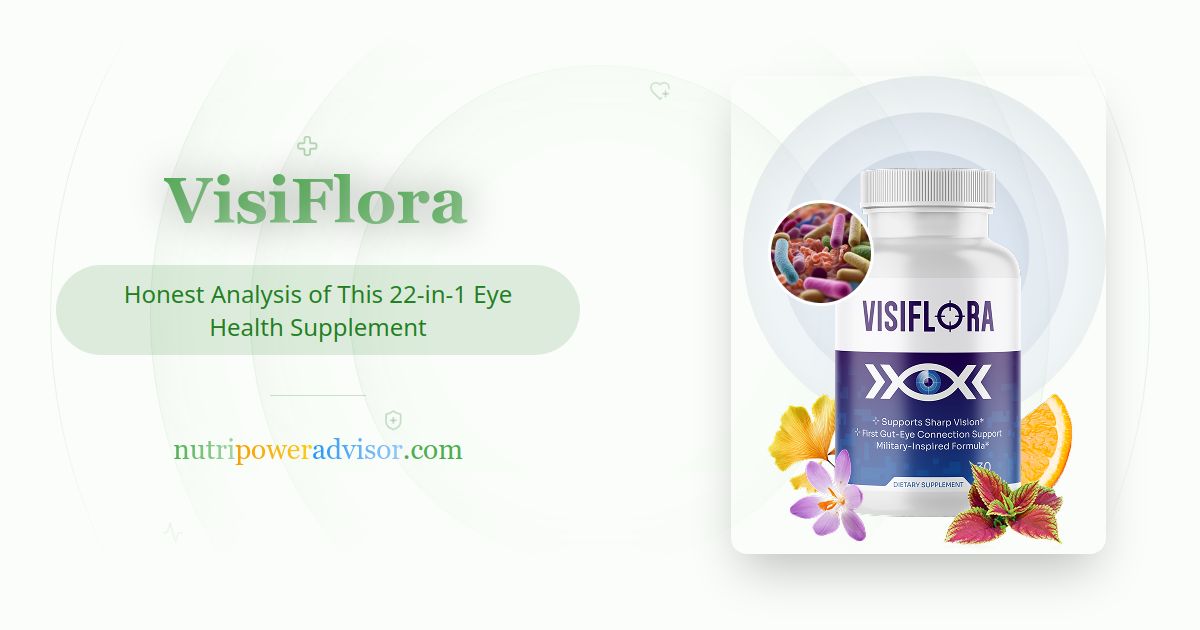
Quick Verdict
Here is the straightforward bottom line: VisiFlora is a reasonably formulated eye health supplement with legitimate ingredients backed by published research, but its 22-in-1 approach creates structural dose limitations that affect how closely it can match clinical research protocols. The formula combines well-established eye health components — lutein, zeaxanthin, bilberry, astaxanthin, vitamin A — with newer "gut-eye axis" ingredients including probiotics, which is an emerging but not yet fully validated area of research.
The honest reality of eye health supplements: the AREDS2 study (Age-Related Eye Disease Study 2), conducted by the National Eye Institute over multiple years with thousands of participants, is the gold standard for evaluating vision supplements. That study established specific doses (10mg lutein, 2mg zeaxanthin, 500mg vitamin C, 400 IU vitamin E, 80mg zinc, 2mg copper) that demonstrably reduced AMD progression. Generic AREDS2-based products like PreserVision AREDS2 are widely available, well-researched, and significantly cheaper than VisiFlora.
VisiFlora's value proposition is comprehensive coverage — 22 ingredients targeting multiple mechanisms simultaneously, with the additional gut-eye axis angle that AREDS2 products don't address. Whether this broader approach justifies the premium price ($49-79 vs. $20-30 for AREDS2 generics) depends on how much you value the additional ingredients vs. proven clinical research dosing.
The 60-day money-back guarantee through ClickBank provides reasonable financial protection, though it's notably shorter than competitors offering 90-365 day windows. The product is sold exclusively online through the official website, which is standard for direct-to-consumer supplements but means you cannot easily find independent reviews.
Rating: 3.6 / 5
| Factor | Score |
|---|---|
| Lutein & Zeaxanthin inclusion | ⭐⭐⭐⭐ (4/5) |
| Bilberry & Astaxanthin evidence | ⭐⭐⭐⭐ (4/5) |
| Gut-eye axis (emerging science) | ⭐⭐⭐ (3/5) |
| 22-ingredient dose dilution | ⭐⭐ (2/5) |
| AREDS2 dose alignment | ⭐⭐⭐ (3/5) |
| Marketing accuracy | ⭐⭐⭐ (3/5) |
| Value vs. AREDS2 alternatives | ⭐⭐ (2/5) |
| 60-day guarantee | ⭐⭐⭐⭐ (4/5) |
→ Check the current VisiFlora offer with 60-day guarantee
Table of Contents
- What Is VisiFlora?
- The AREDS2 Standard You Need to Know About First
- The 22-Ingredient Dose Dilution Problem
- The Gut-Eye Axis: Real Science or Marketing Trend?
- Key Ingredients: What Clinical Research Actually Shows
- What VisiFlora Is Missing That AREDS2 Has
- VisiFlora vs. PreserVision AREDS2 (The Honest Comparison)
- Realistic Results Timeline
- Real Customer Feedback (And What's Missing)
- When to See an Eye Doctor Instead
- Who VisiFlora Is Genuinely Right For
- Who Should Skip This Product
- Pricing and the 60-Day Guarantee
- The Honest Verdict
- Frequently Asked Questions
What Is VisiFlora?
VisiFlora is a daily eye health supplement marketed as a "22-in-1 vision-essential formula" designed to support multiple aspects of eye wellness simultaneously. It comes in capsule form with a recommended protocol of one to two capsules daily, taken with water. Each bottle provides approximately a 30-day supply.
The product is sold exclusively through the official website via ClickBank — the well-established digital marketplace platform that handles billing, refunds, and buyer protection reliably. Manufacturing is done in the United States in FDA-registered, GMP-certified facilities. The formula is non-GMO, vegan, gluten-free, and stimulant-free.
The 22-ingredient formula combines three categories:
1. Macular wellness ingredients — Lutein, zeaxanthin, bilberry extract, astaxanthin, vitamin A 2. Antioxidant defense — Vitamin C, vitamin E, alpha-lipoic acid, grape seed extract, quercetin, rutin 3. Gut-eye support ingredients — Probiotics, taurine, digestive enzymes, additional botanicals
The marketing positioning emphasizes the "gut-eye axis" — the concept that gut health influences how well your body absorbs and delivers nutrients to your eyes. This is a real emerging research area, though more established for general inflammation than specifically for eye disease prevention.
VisiFlora targets adults over 40 dealing with screen time eye strain, age-related vision concerns, and those wanting comprehensive nutritional support for long-term eye health.
The AREDS2 Standard You Need to Know About First
Before evaluating VisiFlora specifically, you need to understand the gold standard of eye health supplement research. This context will help you make an informed decision about whether VisiFlora's broader formula or a more focused AREDS2-based product better fits your needs.
What AREDS2 Is
The Age-Related Eye Disease Study 2 (AREDS2) was a 5-year clinical trial conducted by the National Eye Institute (NEI), part of the National Institutes of Health (NIH). It enrolled over 4,000 participants aged 50-85 with intermediate or advanced AMD (age-related macular degeneration) in one or both eyes. Few supplement studies in any category match its rigor.
What AREDS2 Established
The study identified a specific combination of nutrients and doses that demonstrably reduced the progression of AMD by approximately 25% in at-risk populations:
- Vitamin C: 500 mg
- Vitamin E: 400 IU
- Zinc oxide: 80 mg (or 25 mg low-zinc formula)
- Copper: 2 mg
- Lutein: 10 mg
- Zeaxanthin: 2 mg
These specific doses are what produced the documented benefit. Doses substantially below these levels have not been shown to produce equivalent effects.
Why This Matters for VisiFlora
VisiFlora contains lutein, zeaxanthin, vitamin C, vitamin E, and presumably zinc and copper among its 22 ingredients. The critical question is whether these ingredients are present at AREDS2 doses or at significantly lower amounts.
The transparency issue: VisiFlora's marketing emphasizes "meaningful doses" but does not publicly disclose specific milligram amounts of each ingredient. Without knowing the exact lutein, zeaxanthin, vitamin C, vitamin E, and zinc content per serving, you cannot verify whether the formula meets AREDS2 dosing standards.
The structural challenge: Fitting 22 ingredients into a daily serving while maintaining AREDS2 doses for the key components is mathematically difficult. AREDS2 doses for the six main ingredients alone total approximately 992 mg + 400 IU per day. Adding 16 more ingredients alongside means each component competes for limited capsule space.
This doesn't necessarily mean VisiFlora is ineffective — modest doses of multiple synergistic ingredients can provide meaningful benefits. But it does mean the product cannot match AREDS2 clinical evidence specifically.
The 22-Ingredient Dose Dilution Problem
This deserves direct examination because it's the structural issue affecting all "kitchen sink" supplements with high ingredient counts.
The Mathematical Reality
A standard supplement capsule typically contains 500-800 mg of total active ingredients. A two-capsule daily serving might deliver 1,000-1,600 mg total. Distributing this across 22 ingredients means an average of 45-73 mg per ingredient — far below clinical research doses for most.
Consider what clinical research actually uses:
| Ingredient | Research Dose | Realistic Amount in 22-in-1 Formula |
|---|---|---|
| Lutein | 10 mg (AREDS2) | Possibly 5-10 mg (achievable) |
| Zeaxanthin | 2 mg (AREDS2) | Possibly 1-2 mg (achievable) |
| Vitamin C | 500 mg (AREDS2) | Likely 50-200 mg |
| Vitamin E | 400 IU (AREDS2) | Likely 30-100 IU |
| Zinc | 80 mg (AREDS2) | Likely 8-25 mg |
| Bilberry | 160-320 mg (research) | Likely 20-80 mg |
| Astaxanthin | 4-12 mg (research) | Likely 1-4 mg |
| Grape seed extract | 100-300 mg (research) | Likely 25-75 mg |
| Quercetin | 500-1000 mg (research) | Likely 25-100 mg |
What This Means Practically
VisiFlora is almost certainly providing AREDS2 doses for lutein and zeaxanthin (these are physically small amounts that fit easily). For vitamin C, vitamin E, zinc, and the larger-dose ingredients like bilberry, grape seed, and quercetin, the doses are likely significantly below research levels.
This isn't necessarily useless — modest doses across multiple ingredients can provide synergistic benefits, and not every ingredient needs to match research doses to contribute to the overall formula. But you should understand you're getting broad nutritional coverage at lower individual potencies rather than clinical-grade doses across all ingredients.
The Comparison That Matters
A simple AREDS2 supplement contains exactly the 6 ingredients above at exactly the studied doses. It costs approximately $20-30 per month at retail. It has the strongest clinical evidence in the entire eye supplement category.
VisiFlora costs $49-79 per month for 22 ingredients at unknown (likely lower) individual doses, plus the gut-eye axis angle. The premium is real; whether it's worth paying depends on what you value.
The Gut-Eye Axis: Real Science or Marketing Trend?
VisiFlora's primary differentiation from AREDS2-based products is its emphasis on the gut-eye axis. Let me give you an honest assessment of where this science stands.
What's Genuinely Established
The gut microbiome influences systemic health. This is foundational science — the trillions of bacteria in your gut affect immune function, inflammation, nutrient absorption, and metabolic health throughout the body.
Inflammation affects eye health. Chronic systemic inflammation is implicated in AMD, diabetic retinopathy, and other eye conditions. The gut microbiome is a major regulator of systemic inflammation.
Some emerging research connects gut and eye health. Studies have explored how gut bacteria composition correlates with eye disease risk, particularly for AMD and dry eye disease. Some research suggests dysbiosis (imbalanced gut bacteria) may contribute to certain eye problems.
Where the Science Is Still Emerging
Specific probiotic interventions for eye disease are not yet validated. While the gut-eye connection has biological plausibility, large clinical trials demonstrating that specific probiotics improve eye health outcomes are limited. This is in early-to-middle stages of research, not established medical practice.
Most "gut-eye axis" research focuses on correlation, not causation. Observational studies showing relationships between gut bacteria and eye health don't necessarily mean adding probiotics will improve eye outcomes.
The specific probiotic strains in VisiFlora are not disclosed. Without knowing which strains and at what CFU counts, you cannot evaluate whether the probiotic component matches any published research.
The Honest Interpretation
The gut-eye axis is a legitimate emerging research area, but it has not yet reached the level of evidence that AREDS2 has for traditional eye nutrients. Including probiotics in an eye supplement is reasonable based on the underlying science, but expecting them to be the primary driver of eye health benefits is premature based on current evidence.
If gut health is a concern of yours generally, dedicated gut-focused products (like LeanBiome, which we've reviewed) provide significantly higher CFU counts and more strain-specific research backing.
Key Ingredients: What Clinical Research Actually Shows
⭐ Lutein & Zeaxanthin — The Most-Evidenced Ingredients
These carotenoids concentrate specifically in the macula (the central area of the retina) and provide both antioxidant protection and blue light filtering. They are the most clinically validated ingredients for eye health.
The AREDS2 evidence: 10 mg lutein + 2 mg zeaxanthin daily was shown to reduce AMD progression risk in the NIH-funded clinical trial. This is the dose standard for eye supplements.
Additional research: Multiple studies have shown lutein and zeaxanthin support contrast sensitivity, reduce glare recovery time, and may help with screen-related eye strain. They are among the most reliably effective eye supplement ingredients.
For VisiFlora users: If the lutein and zeaxanthin doses match AREDS2 levels (10mg and 2mg respectively), this is the strongest aspect of the formula. If lower, the benefits may be proportionally reduced.
⭐ Bilberry Extract
Bilberry contains anthocyanins with documented effects on capillary function and antioxidant activity in eye tissue. Traditional use spans centuries, and modern research supports modest benefits for night vision and eye fatigue.
The dose question: Effective research doses are typically 160-320 mg of standardized bilberry extract daily. Within a 22-ingredient formula, the actual bilberry content is likely below this range.
⭐ Astaxanthin
A potent carotenoid antioxidant with research supporting eye fatigue reduction, blood flow to the eye, and protection against oxidative damage to retinal cells.
The evidence: Studies typically use 4-12 mg daily of astaxanthin for documented effects. The amount in a 22-ingredient formula is likely below this range, though astaxanthin is potent enough that smaller amounts may still provide some benefit.
Vitamins A, C, and E
Foundational eye health vitamins:
- Vitamin A is essential for retinal function and night vision
- Vitamin C is concentrated in the eye's aqueous humor and provides antioxidant protection
- Vitamin E protects cell membranes from oxidative damage
The dose question: AREDS2 used 500 mg vitamin C and 400 IU vitamin E. VisiFlora likely provides substantially less of each, though even modest doses contribute to overall nutritional adequacy.
Alpha-Lipoic Acid (ALA)
A universal antioxidant that works in both water-soluble and fat-soluble environments, regenerating other antioxidants like vitamins C and E. Some research supports protective effects in eye tissue.
Mechanistic relevance: ALA's role in regenerating other antioxidants makes it particularly useful in multi-component formulas where it can amplify effects of vitamins C and E.
Probiotics
The "gut-eye axis" component. Without specific strain disclosure, evaluating efficacy is difficult. Generally, probiotics for systemic effects require 1-10 billion CFU daily of specific researched strains.
For comparison: Dedicated probiotic products like ProDentim provide specific strain identification (Lactobacillus reuteri, Lactobacillus paracasei) with documented research applications. VisiFlora's probiotic component is less transparent.
Quercetin, Rutin, Grape Seed Extract
Flavonoid antioxidants that support capillary integrity and provide additional antioxidant defense. Research supports modest benefits for vascular health and oxidative stress reduction.
Dose realities: All require 100+ mg for meaningful research-validated effects. Within a 22-ingredient formula, individual amounts are likely modest.
Ginkgo Biloba
Improves microcirculation, including potentially to eye tissues. Research is mixed for cognitive applications but mechanistically relevant for circulatory support.
Important caveat: Ginkgo has documented antiplatelet effects and can interact with anticoagulant medications. Discuss with your physician if you take blood thinners.
Coleus Forskohlii (Forskolin)
Has some research for glaucoma support (intraocular pressure reduction) — though this is specifically for diagnosed glaucoma management, not general eye health. Its inclusion in a general eye supplement is more mechanistic than directly therapeutic.
Taurine
Amino acid that supports retinal cell hydration and may have neuroprotective effects on retinal tissue. Generally safe with modest evidence for eye health support.
What VisiFlora Is Missing That AREDS2 Has
Honest comparison reveals some specific gaps:
1. Verified zinc dose: AREDS2's 80 mg zinc oxide is one of the active components shown to reduce AMD progression. VisiFlora likely contains less, and the specific amount is undisclosed.
2. Verified copper dose: AREDS2's 2 mg copper is paired with zinc to prevent zinc-induced copper deficiency. The relationship matters; VisiFlora's copper content is undisclosed.
3. Documented clinical efficacy: AREDS2 is one of the most rigorous supplement studies ever conducted. VisiFlora has no equivalent product-specific clinical research.
4. Decades of safety and efficacy data: AREDS2-based products have been used for years with extensive monitoring. VisiFlora is newer with less long-term outcome data.
5. Lower price point: AREDS2 generic products cost $20-30/month vs. VisiFlora at $49-79/month.
What VisiFlora offers that AREDS2 doesn't:
- Astaxanthin
- Bilberry
- Probiotics for gut-eye axis
- Antioxidant flavonoids (quercetin, rutin, grape seed)
- Circulatory support (ginkgo, coleus)
- Comprehensive multi-mechanism approach
The honest question: are these additional ingredients worth the $20-50/month premium over AREDS2? For some users, yes. For others, no.
VisiFlora vs. PreserVision AREDS2 (The Honest Comparison)
This is the comparison most relevant to informed buyers:
| VisiFlora | PreserVision AREDS2 | |
|---|---|---|
| Total ingredients | 22 | 6 (the AREDS2 formula) |
| Lutein dose | Likely 5-10 mg | 10 mg (AREDS2 standard) |
| Zeaxanthin dose | Likely 1-2 mg | 2 mg (AREDS2 standard) |
| Vitamin C dose | Likely 50-200 mg | 500 mg (AREDS2 standard) |
| Vitamin E dose | Likely 30-100 IU | 400 IU (AREDS2 standard) |
| Zinc dose | Likely 8-25 mg | 80 mg or 25 mg (AREDS2 standard) |
| Additional ingredients | Bilberry, astaxanthin, ALA, probiotics, etc. | None |
| Clinical evidence | Indirect (ingredients researched separately) | Direct (5-year NIH study) |
| Monthly cost | $49-79 | $20-30 |
| Refund policy | 60-day guarantee through ClickBank | Standard retailer policies |
| Best for | Comprehensive coverage seekers | Those wanting validated AMD prevention |
The Honest Recommendation
For people with diagnosed AMD or significant family history of AMD: PreserVision AREDS2 has dramatically stronger evidence and is your evidence-based choice. Your ophthalmologist will likely recommend it specifically.
For people seeking general eye wellness without specific disease concerns: VisiFlora's broader approach with antioxidants, gut-eye support, and additional botanicals may provide value beyond what AREDS2 alone offers — if you can afford the premium.
For people on a budget: AREDS2 generic products provide proven eye health support at a fraction of VisiFlora's cost. The science supports prioritizing AREDS2 doses over broader coverage at sub-clinical doses.
This comparison isn't about VisiFlora being a "bad" product — it's about understanding what each option delivers so you can make an informed choice based on your specific situation, budget, and preferences.
Realistic Results Timeline
Setting honest expectations:
| Timeframe | What You May Realistically Notice |
|---|---|
| Week 1-2 | No noticeable changes. Foundational nutrient status normalizing |
| Week 3-4 | Possible subtle reduction in eye fatigue from screen use (lutein/zeaxanthin building macular pigment) |
| Week 6-8 | Macular pigment density may begin showing measurable increases (this is the standard timeline for lutein effects) |
| Week 8-12 | Cumulative antioxidant protection establishing. Some users notice improved contrast or glare recovery |
| Month 3-6 | Full evaluation window. AREDS2 research showed effects emerging at 6 months and consolidating over years |
| Year 1+ | Long-term protective effects (if doses are adequate). This is where AMD progression reduction would manifest |
The critical honest truth: Eye supplement effects are cumulative and measured over months to years, not weeks. The most important benefits — reduced AMD progression, sustained macular pigment density — emerge over years of consistent use. The 60-day guarantee window is short for genuine evaluation of this product category.
Users who quit at 30 days because they don't see dramatic vision improvements are stopping during the exact window when foundational benefits are establishing. The marketing testimonials suggesting "improved vision in 2-4 weeks" overstate the realistic timeline.
If you're using VisiFlora for diagnosed eye conditions, work with your ophthalmologist on specific monitoring protocols rather than relying on subjective vision impressions.
Real Customer Feedback (And What's Missing)
Honest assessment of the customer review landscape:
What's Notably Absent
No verifiable independent third-party reviews. Searches across Trustpilot, Reddit, Amazon, and supplement-specific forums reveal a notable absence of independent customer feedback. For a product claiming substantial sales numbers, this silence is conspicuous.
This could mean:
- The product is genuinely new with limited customer base
- Marketing focuses on official-website-only sales without third-party visibility
- Most users haven't sought out independent platforms to share feedback
What Reviews Exist
The reviews available primarily exist on:
- The official VisiFlora website (curated, likely selected for impact)
- Affiliate review sites (financially incentivized to be positive)
- Health blog reviews (varying quality and independence)
This is a less robust review landscape than established supplements typically have. Buyers should weigh this when evaluating product credibility.
Patterns Across Available Reviews
Positive themes (where reviews exist):
- Reduced eye fatigue from screen use within 3-6 weeks
- Subjective improvement in night vision
- Less glare sensitivity
- General sense of better eye comfort
- Easy compliance with capsule format
Negative themes:
- No noticeable effects for some users (typical for any supplement)
- Price concerns at single-bottle purchases
- Disappointment for users expecting dramatic vision restoration
- Refund process navigation challenges (typical ClickBank patterns)
How to Interpret the Limited Review Data
The absence of robust independent feedback is a yellow flag, not a red flag. It suggests either a newer product or one whose distribution model limits independent verification. The 60-day guarantee provides protection if your individual experience doesn't match expectations.
If extensive third-party verification matters for your purchasing confidence, AREDS2 generic products have decades of customer feedback and clinical research backing.
When to See an Eye Doctor Instead
Eye health concerns that require professional evaluation, not supplements:
See an ophthalmologist immediately if you experience:
- Sudden vision loss in one or both eyes — possible retinal detachment or stroke
- Sudden onset of floaters or flashes of light — possible retinal tear or detachment
- Persistent eye pain — many causes require medical evaluation
- Sudden double vision — possible neurological or muscular issue
- Vision changes with headache — possible migraine, glaucoma, or other condition
- Eye redness with vision changes — possible iritis, glaucoma, or infection
- Curtain-like shadow over your visual field — emergency retinal detachment symptom
- Distorted vision (straight lines appearing wavy) — possible AMD progression
- Diabetes diagnosis — annual diabetic retinopathy screening is essential
Schedule routine ophthalmologist appointments if you:
- Are 40+ and haven't had a comprehensive eye exam recently
- Have family history of AMD, glaucoma, or retinal conditions
- Have diabetes (annual diabetic retinopathy screening required)
- Have uncontrolled hypertension
- Wear contact lenses with concerns about eye comfort
- Have not had a baseline eye exam in 1-2+ years
What Professional Eye Care Provides That Supplements Cannot
- Visual acuity testing to detect changes you may not notice
- Macular OCT scans to detect AMD before symptoms appear
- Visual field testing to detect glaucoma early
- Retinal photography for ongoing comparison
- Pupil dilation to examine retinal health
- Specific diagnoses that direct appropriate treatment
For diagnosed conditions, prescription medications, laser treatments, intraocular injections (for AMD), and surgery are evidence-based interventions that supplements cannot replace.
VisiFlora is positioned as a wellness supplement for general eye health support — appropriate for adults wanting nutritional eye care as a complement to professional eye examinations, not as a replacement for them.
Who VisiFlora Is Genuinely Right For
VisiFlora may be worth considering if you:
✅ Are an adult (40-70) with general eye wellness goals rather than diagnosed conditions
✅ Spend significant time on screens (work, recreation) and want comprehensive antioxidant support
✅ Are already taking a basic AREDS2 product and want additional ingredients (astaxanthin, bilberry, probiotics) on top of that foundation
✅ Are interested in the gut-eye axis approach and value the inclusion of probiotics
✅ Want comprehensive nutritional eye support without managing multiple separate supplement bottles
✅ Have realistic expectations about modest, cumulative benefits over months
✅ Have discussed the supplement with your eye doctor if you have any vision concerns
✅ Can afford the premium price ($49-79/month) without sacrificing other priorities
VisiFlora is probably not the right fit if you:
❌ Have diagnosed AMD — discuss AREDS2 specifically with your ophthalmologist; the dose specificity matters
❌ Have diagnosed glaucoma — specialized treatment is required; supplements are adjunctive at best
❌ Have diabetic retinopathy — requires medical management, not consumer supplements
❌ Are looking for the most evidence-based eye supplement — AREDS2 generic products win this comparison
❌ Are on a tight budget — AREDS2 generics offer better value per dollar of evidence
❌ Expect dramatic vision restoration — no supplement can reverse established eye conditions
❌ Take anticoagulant medications without physician guidance (Ginkgo interaction)
❌ Are scheduled for eye surgery within 2 weeks (discontinue Ginkgo)
❌ Are pregnant, nursing, or under 18
❌ Want complete dosage transparency — VisiFlora doesn't disclose individual milligram amounts
Who Should Skip This Product
❌ Anyone with concerning vision symptoms — see an eye doctor immediately
❌ Diagnosed eye disease patients — work with your ophthalmologist on appropriate treatment
❌ Users seeking AREDS2-validated AMD prevention — buy actual AREDS2 products instead
❌ Cost-conscious buyers — better value alternatives exist
❌ Users wanting validated probiotic CFU counts — dedicated probiotic products provide better strain-specific information
❌ Anyone on blood thinners without physician approval — Ginkgo interaction concerns
❌ Pregnant or nursing women without obstetric guidance
❌ Users expecting medical-grade vision improvements — supplements don't replace medical interventions
Pricing and the 60-Day Guarantee
Based on publicly available information:
| Package | Price per Bottle | Total | Best For |
|---|---|---|---|
| 1 Bottle (30-day supply) | $79 | $79 + shipping | Skeptical first trial |
| 3 Bottles (90-day supply) | $59 | $177 | Realistic minimum commitment |
| 6 Bottles (180-day supply) | $49 | $294 + FREE shipping | Best per-bottle value |
The 60-day money-back guarantee is processed through ClickBank, providing reliable refund infrastructure. However:
- 60 days is short for eye supplement evaluation (research shows effects emerge over 6+ months)
- Refund process requires return shipping at customer expense
- ClickBank processing is reliable but requires following specific refund procedures
Comparison to relevant alternatives:
- VisiFlora: $49/bottle (6-pack), 60-day guarantee
- PreserVision AREDS2: ~$20-30/month at retail, standard return policies
- Generic AREDS2 supplements: $15-25/month, varying return policies
- Ocuvite (eye supplement): $20-35/month, accessible at retail
- VisiFlora value calculation: ~$1.60/day for 22 ingredients
For users who specifically want the gut-eye axis approach plus comprehensive coverage, the price may be justified. For users primarily wanting evidence-based AMD prevention, AREDS2 generics offer better evidence-to-cost ratios.
→ See the current VisiFlora offer with 60-day guarantee
The Honest Verdict
VisiFlora is a reasonably formulated comprehensive eye health supplement with legitimate ingredients and an interesting gut-eye axis angle. The 22-ingredient approach provides broad coverage targeting multiple aspects of vision health simultaneously, and the inclusion of probiotics reflects genuine emerging research about how gut health influences nutrient delivery to the eyes.
The structural challenges are honest ones: 22 ingredients in a daily serving inevitably means lower individual doses than what clinical research has validated for many components. The product cannot match AREDS2 dosing for the key validated nutrients while also fitting 16 additional ingredients into the same capsule space. The dose transparency is limited, making informed comparison difficult.
The competitive context matters significantly. PreserVision AREDS2 and similar AREDS2-based products offer the strongest clinical evidence in the eye supplement category at substantially lower cost ($20-30/month vs. $49-79/month). For users with diagnosed AMD or AMD risk factors, AREDS2-based products are the evidence-based choice and will likely be specifically recommended by your ophthalmologist.
For users seeking comprehensive general eye wellness support — particularly those who already have a foundation of healthy nutrition and want broader coverage including antioxidants, bilberry, astaxanthin, and gut-eye support — VisiFlora can provide value that simpler AREDS2 products don't. The 60-day guarantee provides reasonable financial protection while testing individual response.
The question is whether comprehensive coverage at sub-research doses (VisiFlora) is more valuable than focused doses on validated ingredients (AREDS2 products). For different users, different answers make sense.
Final Rating: 3.6 / 5
- Lutein & Zeaxanthin inclusion: ✅ Likely AREDS2-aligned
- Bilberry & Astaxanthin: ✅ Real evidence at higher doses
- Gut-eye axis approach: ⚠️ Emerging science, not validated for eye disease
- 22-ingredient dose dilution: ⚠️ Inevitable structural limitation
- AREDS2 alignment: ⚠️ Likely below research doses for several key ingredients
- Better evidence-based alternative: AREDS2-based products at lower cost
- 60-day guarantee: ✅ Adequate but short for eye supplement evaluation
- Marketing accuracy: ⚠️ "22-in-1" overstates what such formulas can deliver
→ Visit the official VisiFlora website
Frequently Asked Questions
Will VisiFlora cure my eye conditions or restore my vision? No. No supplement can cure eye conditions or restore lost vision. VisiFlora is a wellness supplement that may support general eye health alongside professional medical care. If you have concerning vision symptoms or diagnosed eye conditions, see an ophthalmologist for proper treatment.
How does VisiFlora compare to AREDS2 supplements? AREDS2-based products have NIH-funded clinical research showing reduced AMD progression at specific doses (10mg lutein, 2mg zeaxanthin, 500mg vitamin C, 400 IU vitamin E, 80mg zinc, 2mg copper). They cost $20-30/month. VisiFlora's 22-ingredient formula likely provides AREDS2-comparable lutein/zeaxanthin doses but lower amounts of vitamin C, E, and zinc, plus 16 additional ingredients at modest doses. AREDS2 has stronger evidence; VisiFlora has broader coverage.
Should I take VisiFlora alongside an AREDS2 product? Possibly, but discuss with your eye doctor first. If you take both, you might exceed safe upper limits for some nutrients (especially zinc, vitamin E). For most users seeking comprehensive eye support, choosing one approach (either VisiFlora's broader coverage or AREDS2's focused proven doses) makes more sense than stacking both.
Does the gut-eye axis really work? The gut-eye axis is a legitimate emerging research area, but specific probiotic interventions for eye disease prevention have limited validation. The biological mechanisms are real; product-specific efficacy claims are less established. If you specifically want gut health support, dedicated probiotic products provide higher CFU counts and more strain-specific research.
How long does it take to see results? Subtle effects may appear in 2-4 weeks for screen-related eye fatigue. Macular pigment density changes manifest over 2-3 months. Long-term protective effects (the most important benefits) emerge over 6-12 months and beyond. The 60-day guarantee window is short for genuine evaluation; commit to 90+ days for fair assessment.
Is VisiFlora safe with my medications? Generally yes for most users, but specific concerns: Ginkgo biloba can interact with anticoagulants (warfarin, rivaroxaban, apixaban, clopidogrel) and should be discontinued 2 weeks before surgery. Coleus forskohlii can affect blood pressure medications. Discuss with your physician before starting if you take prescription medications.
Why doesn't VisiFlora list specific milligram doses? This is standard for proprietary blend supplements but represents a transparency limitation. Without specific doses, you cannot verify whether the formula matches clinical research standards for individual ingredients. AREDS2 products explicitly list their doses because they're trying to match the published research protocol.
What about the Trustpilot reviews? Independent third-party reviews of VisiFlora are notably limited compared to established eye supplements. This could indicate a newer product or limited distribution outside official channels. AREDS2-based products like PreserVision have decades of customer feedback to evaluate.
Where should I buy VisiFlora to avoid counterfeits? Only through the official website. VisiFlora is not authorized for sale on Amazon, retail stores, or other marketplaces. Listings in those channels are likely counterfeit and not eligible for the guarantee.
Should I see an eye doctor before starting? Strongly recommended, especially if you're 40+, haven't had a comprehensive eye exam in 1-2 years, have family history of eye disease, or are experiencing any vision changes. An eye doctor can identify conditions that supplements cannot address and provide professional guidance about whether VisiFlora makes sense for your specific situation. Annual comprehensive eye exams after age 40 are standard recommendations.
→ Visit the official VisiFlora website
This review is for informational and educational purposes only and does not constitute medical advice. VisiFlora is a dietary supplement and has not been evaluated by the FDA to diagnose, treat, cure, or prevent any disease — including age-related macular degeneration, glaucoma, diabetic retinopathy, cataracts, or any other eye condition. Always consult a qualified healthcare professional, particularly an ophthalmologist or optometrist, for any concerning eye symptoms, vision changes, or before starting any new supplement if you have existing eye conditions, take prescription medications (especially anticoagulants), are pregnant or nursing, or have diabetes. Sudden vision changes, eye pain, flashes of light, sudden floaters, or curtain-like shadows over your vision are medical emergencies requiring immediate professional evaluation. Do not delay medical care for any concerning symptoms. Eye health requires regular professional examinations regardless of supplement use.
Tags: visiflora review, visiflora ingredients, does visiflora work, visiflora complaints, eye health supplement review 2026, gut-eye axis supplement, 22-in-1 vision formula, lutein zeaxanthin supplement, visiflora scam or legit, getvisiflora